January 22: Saint Vincent of Saragossa's Day
Céline Arétin, culture, women's issues and environment correspondent, January 22, 2025
Who was Saint Vincent of Saragossa?
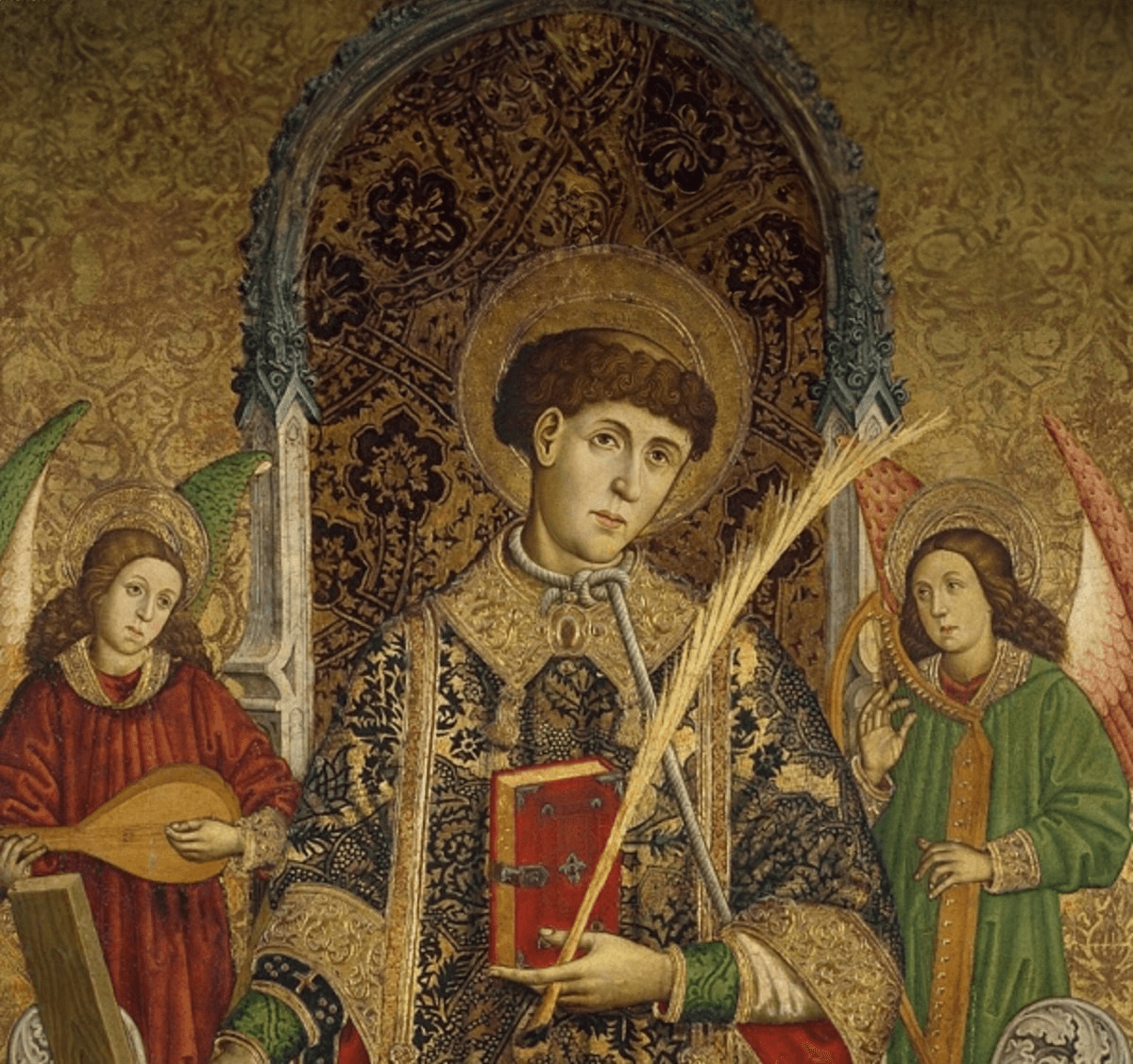
Saint Vincent of Saragossa, also called Vincent the Deacon, was a Christian martyr of the 4th century, born in Huesca, Spain. A deacon under Bishop Valerius, he took part in preaching and administering the sacraments. Captured during the persecutions of Diocletian, he was taken to Valencia where he suffered tortures such as the rack and the burning gridiron, scenes often depicted in medieval art, notably in stained-glass windows like those of Chartres Cathedral. Recognized for his courage, he became the patron saint of winegrowers, tile makers, and certain cities such as Saragossa and Lisbon. His relics, initially kept in Valencia, were transferred to Lisbon where they rest in the Sé Cathedral.
Miracles associated with Saint Vincent of Saragossa
One account tells that after his martyrdom, his body, thrown into a field to be devoured by animals, was protected by ravens that drove away the wild beasts. Another story recounts that, thrown into the sea with a millstone tied around his neck, his body rose to the surface and was washed up on a beach, intact.
Historical context: the Roman Empire and the persecutions
In the early 4th century, the Roman Empire, then under Emperor Diocletian (284-305), was the setting for violent persecutions against Christians, known as the "Great Persecution" (303-311). This episode was not isolated: as early as the reign of Nero (54-68), Christians had been wrongly accused of causing the fire of Rome, leading to mass executions. Under Decius (249-251), an edict required all citizens to sacrifice to the imperial gods, imprisoning or torturing those who refused. Valerian (253-260) further tightened the laws, mainly targeting Church leaders, while Diocletian, seeking to restore the empire's religious cohesion, ordered the destruction of Christian places of worship and the public surrender of Scriptures to be burned. It was in this hostile context that Saint Vincent of Saragossa, a Spanish deacon, was arrested, tortured, and condemned in 304 for refusing to renounce his faith. At the time, Roman authorities saw the rapid spread of Christianity as a threat to the traditional social order. Despite these trials, the spread of Christianity continued, ultimately leading to the Edict of Milan (313) issued by Constantine, which officially ended the persecutions and allowed the faithful to practice their religion freely.
The feast of Saint Vincent around the world
In Burgundy, the famous "Saint-Vincent Tournante" sees winegrowers parade with flower-adorned statues through villages such as Meursault or Saint-Aubin. In Lisbon, the relics of Saint Vincent are carried in a maritime procession on the Tagus, with boats accompanying the crossing to the cathedral. In Mexico, particularly in the state of Jalisco, festivities include folk dances such as the jarabe tapatío, followed by meals featuring dishes such as tamales and pozole.
Saint Vincent of Saragossa in art and literature
Among the most famous examples, the painting Saint Vincent in Glory by Francisco de Zurbarán depicts the saint surrounded by angels, symbolizing his sanctification after the sufferings he endured. El Greco painted The Martyrdom of Saint Vincent, where the details of the gridiron and the executioners convey the intensity of his sacrifice. In Spanish churches such as Valencia Cathedral, bas-reliefs and altarpieces show scenes of his torment, notably the moment he is laid on the gridiron. In literature, Saint Augustine devoted several sermons to Vincent, notably Sermo 276, in which he describes him as a model of faith in the face of persecution.