January 30: feast of Saint Martina
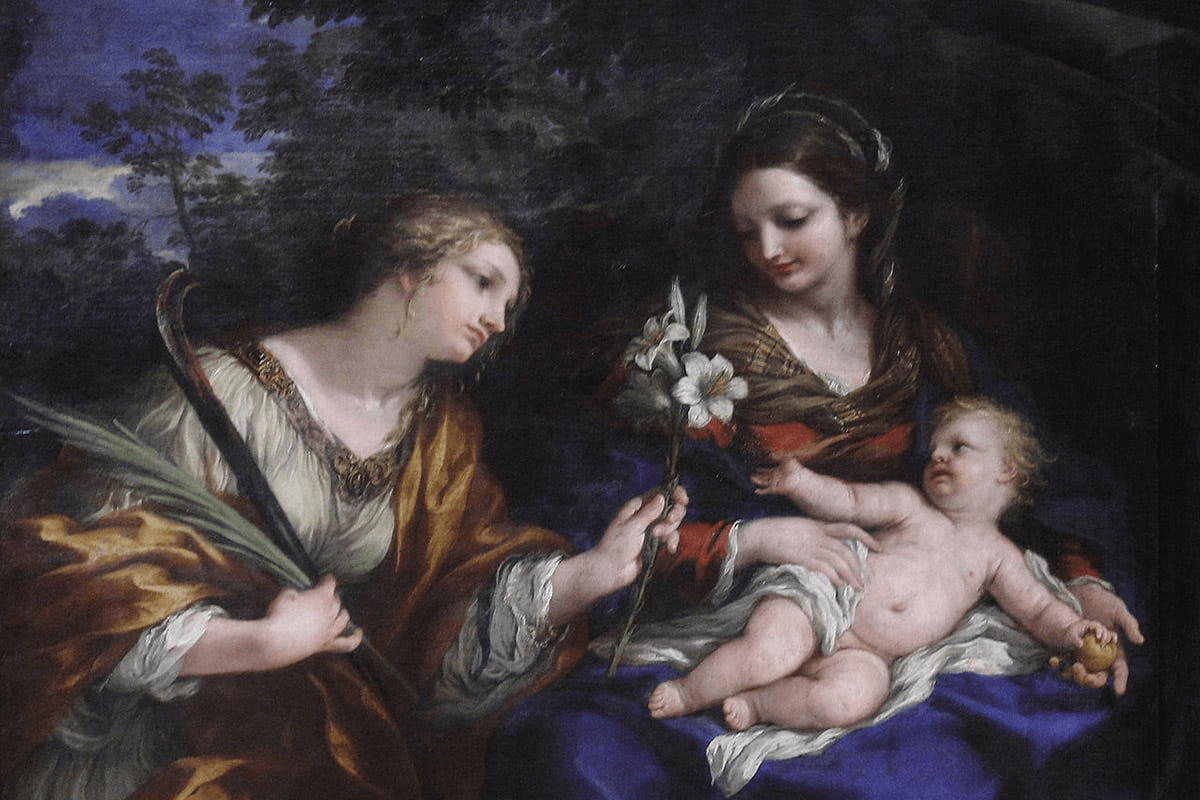
Céline Arétin, head of cultural, women's and environmental topics, January 30, 2025
Who was Saint Martina?
Saint Martina was a Roman martyr of the 3rd century. Born into a noble family, she is said to have refused to renounce her Christian faith under the reign of Emperor Alexander Severus (222-235). According to tradition, she endured many torments, including flogging, exposure to wild beasts and torture by fire, before finally being beheaded. Her cult was promoted by Pope Urban VIII, who had the church of Saints Luke and Martina in Rome restored in her honour in 1635
Celebrations and popular traditions
Every January 30, a solemn Mass is celebrated in the church of Saints Luke and Martina, near the Roman Forum, where her relics were found in 1634. This Mass, often presided over by a cardinal, is followed by a procession in which the faithful carry blessed candles and recite prayers in Latin. In Palombara Sabina, a village near Rome, a statue of Saint Martina is carried in procession to the main square, where blessed loaves are handed out. In France, villages such as Bussy-Saint-Martin and Saint-Martin-d’Abbat still celebrate her feast through Masses and prayer vigils. In the 18th century, a popular custom in Brittany consisted of placing a Saint Martina medal under the pillow of sick children in the hope of their recovery. In some households of the Lyon region, a statuette of Saint Martina was placed near the hearth in winter, in the belief that it would ward off seasonal illnesses.
Official recognition of Saint Martina
In 1634, during restoration work on the church of Saints Luke and Martina in Rome, commissioned by Pope Urban VIII, her relics were discovered beneath the altar. In 1635, Urban VIII ordered the complete rebuilding of the church and had an inscription engraved on the facade in honour of the saint. He himself composed hymns in her honour, including Martinae Virginis, a rare initiative for a pope, and insisted that her feast be officially set on January 30 in the liturgical calendar. This recognition led to the spread of her cult in Italy and France, where several parishes were placed under her patronage, notably at Saint-Martin-d'Abbat and Bussy-Saint-Martin.
Saint Martina in art and literature
In painting, Pietro da Cortona's masterpiece, The Glorification of Saint Martina, created in 1640, is displayed in the church of Saints Luke and Martina in Rome. This painting depicts the saint rising to heaven, surrounded by angels, symbolising her triumph after martyrdom. Another important work is the altarpiece by Giovan Francesco Romanelli, commissioned by Urban VIII for the same church, illustrating the moment of her torment. In the 19th century, Abbot Léon Pétin published Life of Saint Martina, Roman virgin and martyr, in which he describes precisely the tortures she is said to have suffered, such as exposure to wild beasts and flogging. In France, the writer Félix Dupanloup mentions her cult in his writings on the protecting saints of Rome.