January 3: Saint Genevieve's Day
Céline Arétin, head of cultural, women's and ecology-related topics, January 3, 2026
Who was Saint Genevieve?
Saint Genevieve, celebrated on January 3, is the patron saint of Paris and a major figure of Christianity in France. Born around 420 in Nanterre, she devoted herself at a very young age to a life of piety after meeting Saint Germanus of Auxerre, who recognized in her a divine calling. Genevieve is especially known for having galvanized the Parisians during the invasion of the Huns in 451, urging them to pray and not to flee, which is said to have helped turn Attila away from the city. She also organized the provisioning of Paris during a severe famine by bringing in shipments of wheat along the Seine, thereby saving countless lives. Another miracle attributed to Genevieve was her ability to calm storms through her prayers, thus making navigation easier for merchants and fishermen. After her death in 502, her relics were venerated in the former basilica dedicated to her name, today the Panthéon.
Traditions associated with Saint Genevieve's Day
For centuries, processions and solemn Masses have been held, notably at the church of Saint-Étienne-du-Mont, where her relics rest. Among the popular traditions, the faithful light candles to ask for Saint Genevieve's protection against illness and disaster. In the past, bakers offered bread to the poor in her memory during famines. Today, the day is also an occasion for Parisians to celebrate their history by organizing community events and guided tours of the places associated with the saint, such as the Panthéon or Nanterre, her birthplace.
Saint Genevieve in art and culture
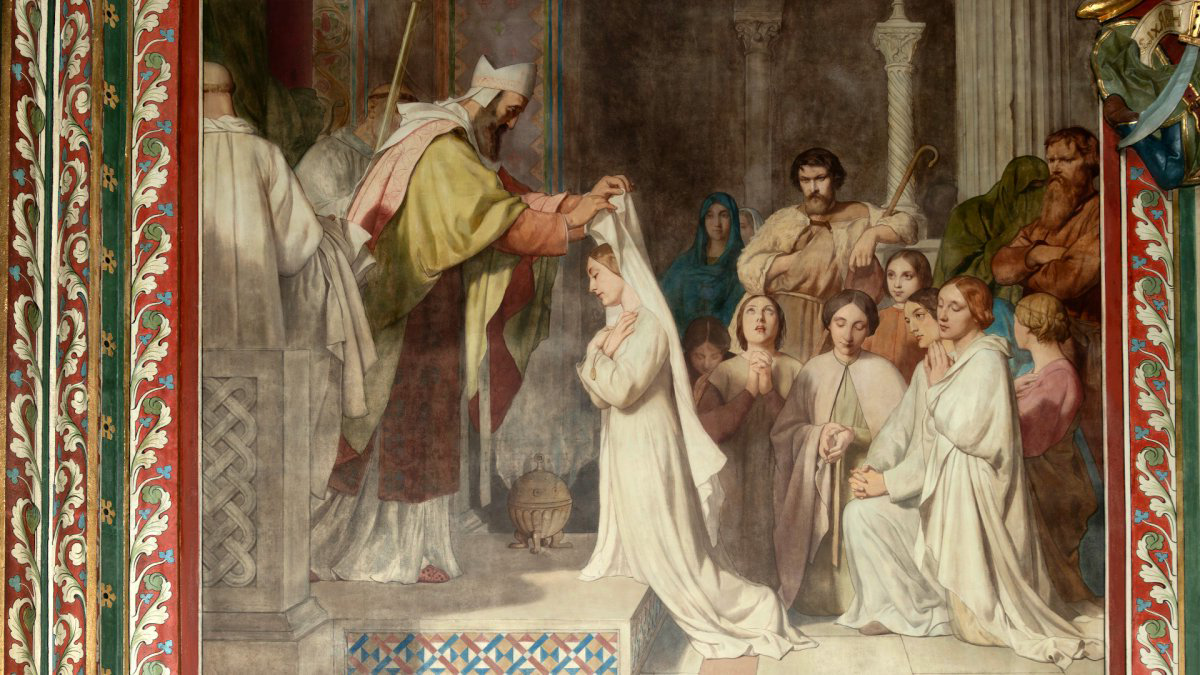
Depicted in numerous works, Saint Genevieve often appears in prayer or distributing bread to the poor. One of the most famous examples is the statue of Saint Genevieve atop the Pont de la Tournelle in Paris, where she is shown with a little girl. She has also inspired stained-glass windows, such as those of Notre-Dame de Paris cathedral, which depict episodes of her life, such as her fervent prayer that is said to have turned Attila away from Paris. Her image is also found in the chapel dedicated to Saint Genevieve in the church of Saint-Étienne-du-Mont, where her relics were once kept. In literature, she is mentioned by Jacobus de Voragine in the "Golden Legend" and by contemporary authors such as André Maurois. In music, she is honored by Gregorian hymns, while in modern art, frescoes and paintings illustrate her legacy, notably those of Puvis de Chavannes at the Panthéon.