February 3: feast of Saint Blaise
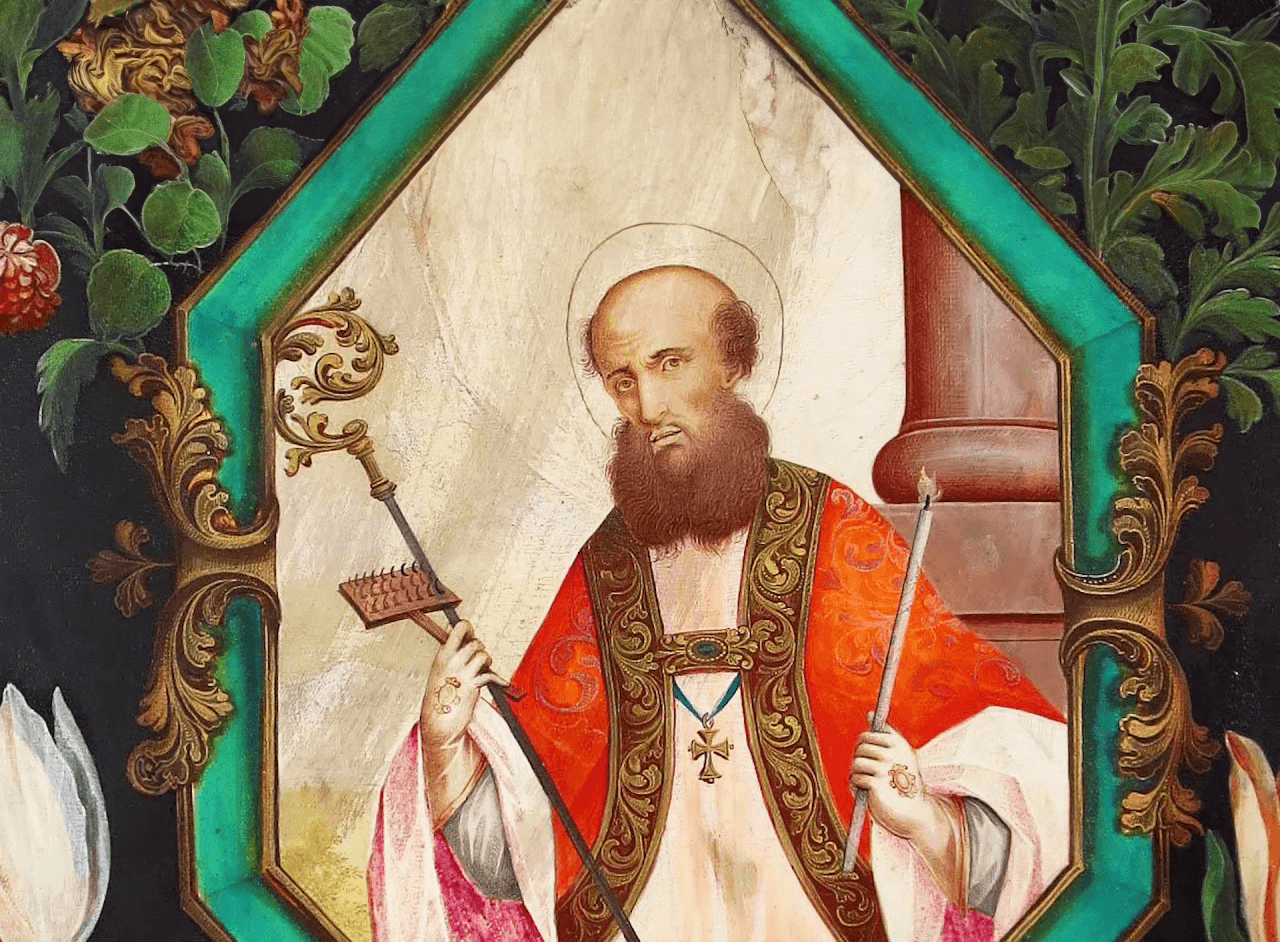
Céline Arétin, in charge of cultural, women's and environmental topics, February 3, 2026
Who was Saint Blaise?
Saint Blaise, Bishop of Sebaste in Armenia (present-day Turkey), was a physician before choosing the life of a hermit in a cave on Mount Argeus, where he tended to injured men and animals. Arrested under Emperor Licinius for his faith, he was imprisoned and tortured with iron wool combs, tools used by wool carders, before being beheaded around 316. His cult spread throughout Europe, and even today, every February 3, churches celebrate the blessing of the throat by crossing two candles under the chin of the faithful, notably in Thann in Alsace and in Paris at the church of Saint-Eustache.
Miracles associated with Saint Blaise
Saint Blaise is best known for his healing miracles, particularly that of a child choking on a fish bone. While he was imprisoned, a desperate mother brought him her dying son. Through his blessing, the child was restored to life, which made Saint Blaise the patron saint of throat ailments. Another miracle tells that, while taking refuge in a cave on Mount Argeus, he healed injured animals that came to him of their own accord, never attacking him. One day, hunters sent by the governor Agricolaus found him surrounded by wild beasts and were astonished to see their submission. They captured him, and on the way to his execution, a poor woman brought him a pig's head to feed him in prison. After his execution, this woman continued to pray to Saint Blaise and saw her only pig, taken by a wolf, returned to her unharmed.
Celebrations and popular traditions
In certain churches, such as in Thann in Alsace or at Saint-Eustache in Paris, priests still practice the blessing of the throats by crossing two candles under the chin of the faithful. In Dubrovnik, Croatia, where Saint Blaise is the patron saint, a large procession is organized. In Italy, particularly in Sicily and Lombardy, it is customary to distribute blessed bread in memory of the miracle of the saved pig. In Austria and Germany, textile craftsmen, particularly wool carders, celebrate Saint Blaise as their protector, since he was martyred with the iron combs used to work wool.
Official recognition of Saint Blaise
Saint Blaise appears in the Roman Martyrology and is included in the liturgical calendar, with a feast celebrated every February 3. His recognition was based on the transmission of his martyrdom under Licinius in the early 4th century. Several medieval councils, such as the Second Council of Nicaea (787), recognized his intercession. He is also venerated by the Orthodox Church, which classes him among the wonder-working saints.
Saint Blaise in art and literature
In Assisi and at Chartres Cathedral, 13th-century frescoes illustrate his martyrdom. In the basilica of San Biagio in Maratea, a huge statue of the saint overlooks the sea, reminiscent of the Christ of Rio. In the Middle Ages, he is mentioned in Jacobus de Voragine's "Golden Legend," which compiles his martyrdom.