February 1: Feast of Saint Bridget of Ireland
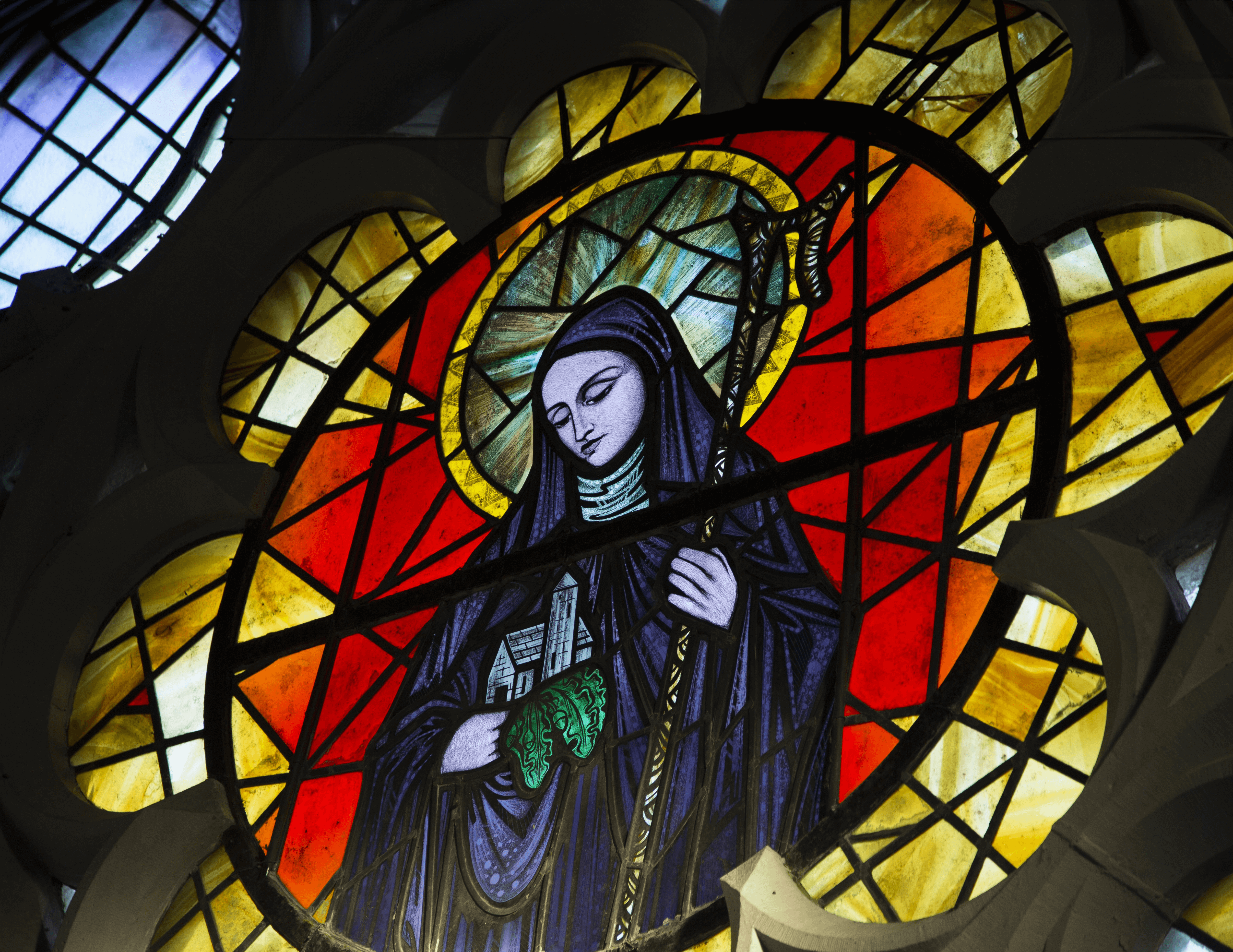
Céline Arétin, editor for cultural, women's and ecology-related topics, February 1, 2026
Who was Saint Bridget of Ireland?
Saint Bridget of Ireland (c. 451-525), also called Brigid of Kildare, was an abbess and founder of the mixed monastery of Kildare. From childhood she is said to have shown great compassion for the poor, going so far as to give away the butter and milk of the family home to those in need. One day, she is said to have given her father's precious sword to a beggar so that he could buy food, which enraged him. Later, refusing an arranged marriage, she entered religious life and founded the monastery of Kildare, which housed a school of illuminated manuscripts and a sacred flame tended by the nuns for more than 600 years.
Miracles associated with Saint Bridget of Ireland
One day, looking for land to establish her monastery at Kildare, she asked the King of Leinster for a plot of land. He, wishing to mock her, agreed on the condition that she take only the area covered by her cloak. Miraculously, her cloak spread out until it covered several acres, thus forcing the king to give her the land.
Celebrations and popular traditions
The feast of Saint Bridget of Ireland is celebrated every year on February 1, a date that coincides with the ancient Celtic festival of Imbolc, marking the end of winter. One of the most important traditions is the making of Saint Bridget's cross, woven from straw or rushes, which is hung above doors and fireplaces to protect the home from fire and illness. In Ireland, groups of children, known as the "Biddy Boys", go around the villages carrying an effigy of the saint and singing prayers in exchange for food or money. In the past, it was also common for families to leave a small piece of cloth or ribbon outside during the night of January 31: this "brat Bhríde" was believed to be blessed by the saint and to serve as a remedy against illness.
Official recognition of Saint Bridget of Ireland
Saint Bridget of Ireland is recognised as one of the three patron saints of Ireland, alongside Saint Patrick and Saint Columba. Her cult developed from the 6th century, shortly after her death in 525. Her importance in the Christian tradition has been confirmed by numerous hagiographic writings, notably the Vita Sanctae Brigidae, written in the 7th century by the monk Cogitosus. In 2023, the Irish government established a public holiday in her honour, marking the first state recognition of a female saint in Ireland. Several cathedrals bear her name, including St Brigid's Cathedral in Kildare, built on the site of her former monastery.
Saint Bridget of Ireland in art and literature
Her first hagiographic text, the Vita Sanctae Brigidae by the monk Cogitosus (7th century), recounts her founding of the monastery of Kildare. Another medieval text, the Leabhar Breac, a compilation of stories in Old Irish, tells how she is said to have healed lepers and multiplied food for the poor. More recently, the novelist Heather Terrell imagined a fictionalised version of her life in her book Brigid of Kildare, published in 2010. In theatre, the play Brigit by Marina Carr, performed in 2014 in Dublin, retraces her life.