January 17: Feast of Saint Roseline
Céline Arétin, head of cultural, women's and ecology-related topics, January 17, 2025
Origins of the Feast of Saint Roseline
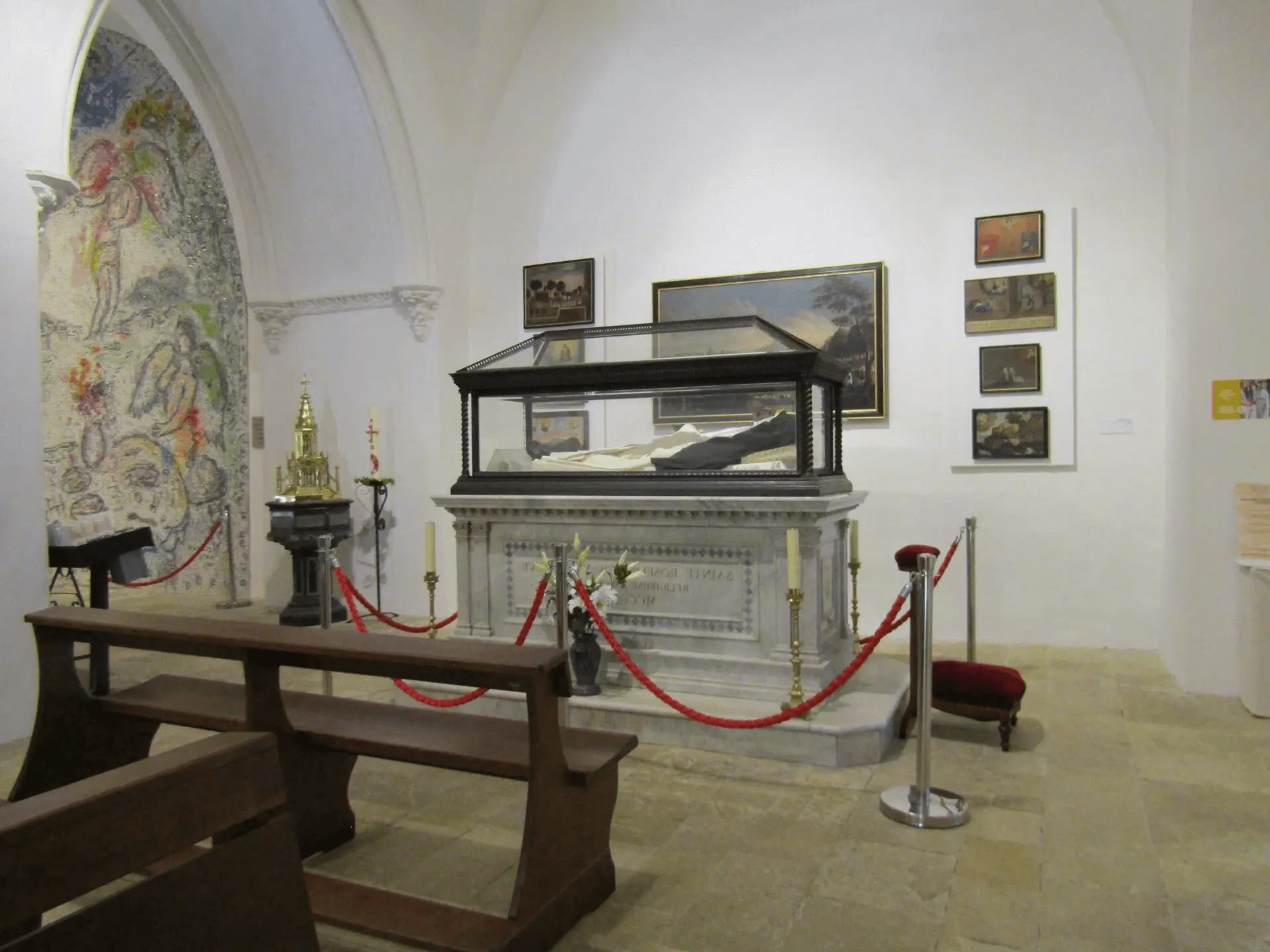
The feast of Saint Roseline, celebrated every January 17, has its origins in the devotion to Roseline de Villeneuve (1263-1329), a French Carthusian nun known for her miracles. Born into a noble Provençal family, she became prioress of the Charterhouse of La Celle-Roubaud, where she devoted her life to serving the poor. Among the famous accounts, the miracle of the "roses and the bread" tells how she was surprised by her father while carrying bread under her cloak for the needy. When he discovered what it held, the loaves turned into roses, a sign of her holiness. Today, this feast is especially celebrated in Les Arcs-sur-Argens, where her body rests in a reliquary kept in the chapel of the Château Sainte-Roseline.
Miracles attributed to Saint Roseline
The miracle of the "roses and the bread" remains the most emblematic: Roseline, surprised by her father with bread hidden under her cloak to feed the poor, saw those loaves turn into roses. In 1329, when she was exhumed, her body was found incorrupt, a phenomenon regarded as a sign of holiness. Even today, her crystal reliquary, containing her miraculously preserved eyes, can be seen in the chapel of Sainte-Roseline in Les Arcs-sur-Argens. It is also said that she healed a child stricken with a severe fever after a desperate mother placed a piece of cloth on her tomb. Another local anecdote describes how she is said to have filled empty jars with wine for poor visitors during a particularly harsh winter.
Official recognition of Saint Roseline
In 1329, shortly after her death, her body was exhumed and found incorrupt, a fact documented by the Carthusians of La Celle-Roubaud. This phenomenon drew the attention of the Church and allowed the establishment of her local cult. In 1660, King Louis XIV, during a journey through Provence, visited the chapel of Sainte-Roseline in Les Arcs-sur-Argens, which strengthened her standing. In 1851, Pope Pius IX officially approved her cult, allowing her feast to be celebrated on January 17 in the diocese of Fréjus-Toulon. Her crystal reliquary, made in the nineteenth century, was installed to display her incorrupt body, in particular her preserved eyes, which still attracts thousands of pilgrims today.
Saint Roseline in art and literature
At the chapel of Sainte-Roseline, located in Les Arcs-sur-Argens, the stained-glass windows created by Marc Chagall depict biblical scenes including "The Meal of the Angels", a tribute to her role as protectress of the poor. A mosaic by Jean Bazaine and a bas-relief by Alfred Manessier also adorn the site. In literature, her life is recounted in medieval hagiographies such as those of the Carthusians of Provence, who documented her miracles, notably that of the "roses and the bread." More recently, she has been mentioned in works devoted to Provence, such as "Sainte Roseline et la chartreuse de La Celle-Roubaud," which explore her religious and social impact.