January 18: feast of Saint Prisca
Céline Arétin, head of cultural, women's and environmental topics, January 18, 2025
Who was Saint Prisca?
The feast of Saint Prisca, celebrated on January 18, has its roots in the history of early Christianity. Saint Prisca, a young Roman noblewoman, is said to have lived in the 1st century under the reign of Emperor Claudius or Nero. According to hagiographic accounts, she was born into a noble family of Rome and was baptised by Saint Peter himself, at a time when Christianity was severely repressed. Arrested for refusing to take part in pagan sacrifices in honour of the Roman gods, she is said to have been publicly whipped, then thrown into a lions' pit during games in an amphitheatre. It is told that the lions, instead of attacking her, lay down at her feet. After this event, she was tortured again, locked in a squalid prison, and finally beheaded at the age of 13. The Basilica of Saint Prisca on the Aventine, one of the oldest churches in Rome, is said to have been built on the ruins of her house. Today, churches in France, such as that of Saint Prisca in Cusset in the Allier, hold processions to honour her memory, recalling the fervour of the early Christians in the face of persecution.
Official recognition of Saint Prisca
As early as the 4th century, Emperor Constantine, after the legalisation of Christianity, had the Basilica of Saint Prisca built on the Aventine in Rome, on the supposed site of her family home. In 494, Pope Gelasius I included her name in an official martyrology. In 1580, Pope Gregory XIII made January 18 the official date for her liturgical feast in the revised calendar, establishing a unified celebration across Europe. Several of her relics were distributed among places of worship: bone fragments are kept at the Basilica of Saint Prisca in Rome, while others were transferred to France, notably to Cusset in the Allier.
Saint Prisca in art and literature
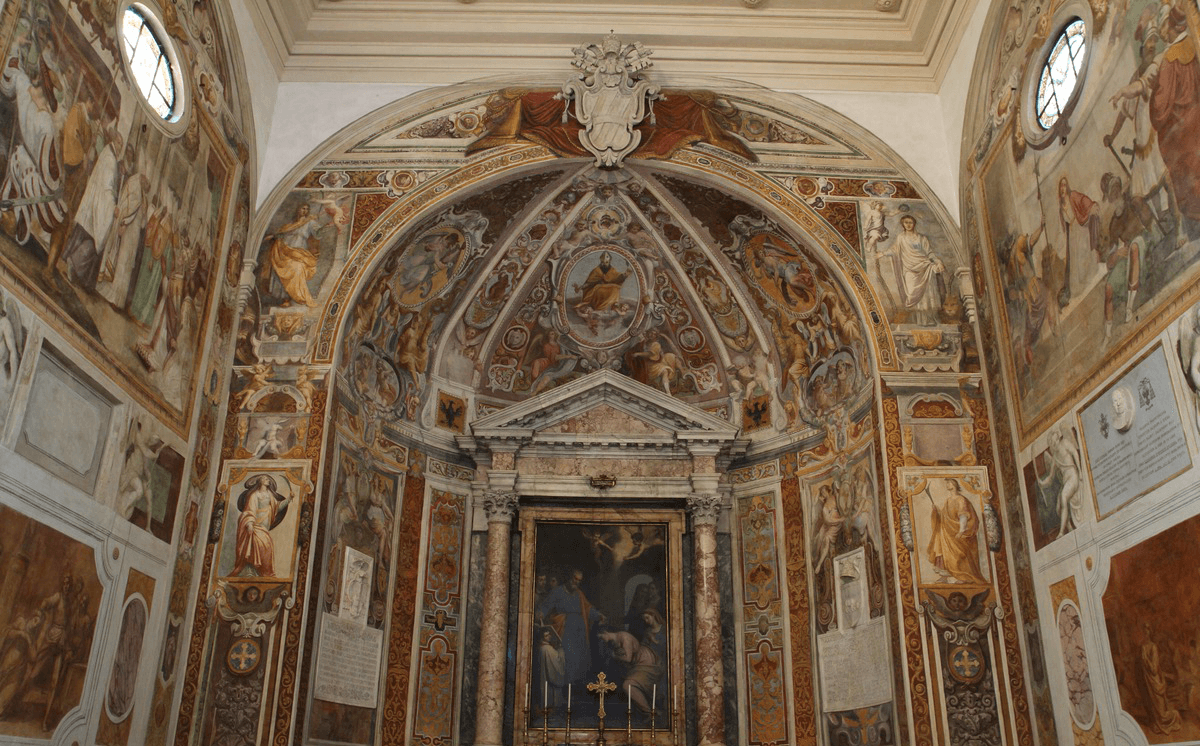
In the Basilica of Saint Prisca in Rome, 4th-century frescoes depict moments of her life, including her baptism by Saint Peter and the miracle of the lions in the amphitheatre, where the beasts lie down at her feet instead of attacking her. These frescoes, rediscovered during restorations in the 16th century under Pope Leo X, are among the oldest illustrations of her martyrdom. In medieval illuminated manuscripts, such as the famous "Martyrology of Bede the Venerable", Saint Prisca is portrayed as a young martyr holding a palm, symbol of victory over death, and a crown. In the Middle Ages, stained-glass windows in European churches, such as those of Sens Cathedral in France, illustrated scenes from her life. In sculpture, a 17th-century statue kept in the church of Cusset, in the Allier, represents Saint Prisca with a lion lying at her feet. In literature, the "Acts of the Martyrs", written between the 3rd and 4th centuries, tell her story with details such as her prayer before the execution. More recently, in the 19th century, writers such as Dom Guéranger included her life in "The Liturgical Year", a work that describes the saints celebrated throughout the year.