January 19: Saint Marius's Day
Céline Arétin, culture, women's issues and environment correspondent, January 19, 2025
Who was Saint Marius?
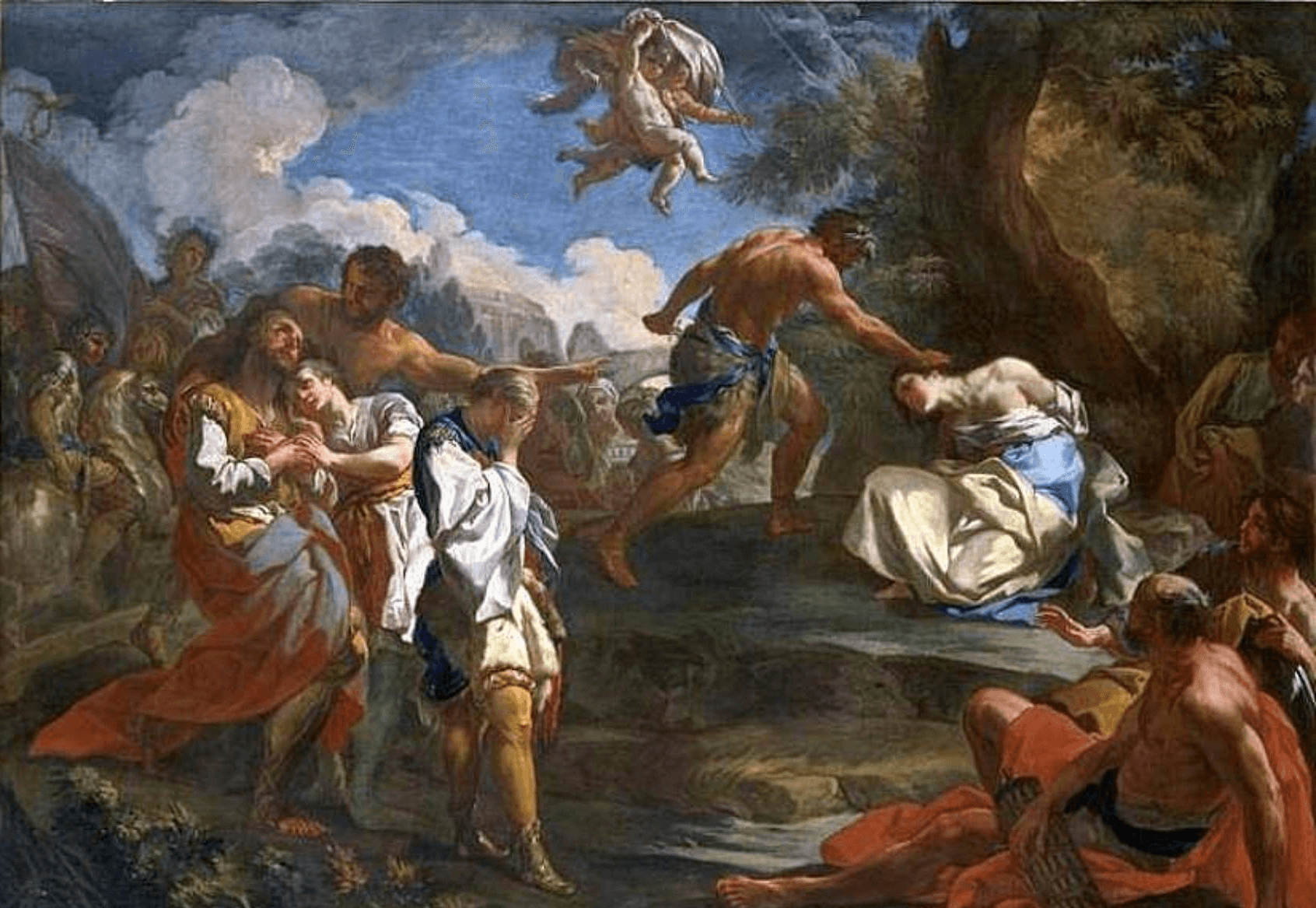
Saint Marius's feast day, celebrated on January 19, traces its origin to the martyrdom of Marius and his family, Persian nobles converted to Christianity in the 3rd century. With his wife Martha and their two sons, Audifax and Abacum, Marius left Persia to make a pilgrimage to Rome. Once in Rome, they secretly helped persecuted Christians, notably by gathering the bodies left in the Forum or near the catacombs and giving them burial in clandestine cemeteries. Discovered by the Roman authorities, they were arrested and subjected to torture: Marius and his sons were led to the Via Cornelia, where they were executed by beheading, while Martha was drowned in a well at Nymphae Catabassi, near Rome. Their bodies were recovered by Christians who buried them in places that became pilgrimage sites. Marius's relics were transferred to the Church of Saint John in Seligenstadt, Germany, where miraculous healings were reported in the Middle Ages, such as that of a paralyzed child found walking again after touching the shrine containing the saint's bones.
Celebrations in honor of Saint Marius
In Seligenstadt, Germany, a procession still crosses the town's medieval streets today. The faithful carry the shrine containing the relics of Saint Marius, his wife Martha, and their sons, accompanied by liturgical chants such as the famous "Te Deum". In Rome, at the church of San Martino ai Monti, a special Mass is celebrated, followed by a display of relics where pilgrims come to lay candles in homage. In Provence, some villages, such as Saint-Maurice-sur-Dargoire, mark this date with blessings of the fields, a custom dating back to the Middle Ages, when Saint Marius was invoked to protect crops against bad weather. In Armenia, during the celebrations, a passage from the "Acts of the Martyrs" is read, describing the scene of Marius's martyrdom and that of his family. Finally, in Seligenstadt, pilgrims still come today to touch the shrine where the relics are kept, believing in its power to heal illness.
Official recognition of Saint Marius
The earliest texts mentioning Saint Marius and his family, such as the "Hieronymian Martyrology," document their execution under Emperor Claudius II around 270 and their burial in the catacombs of Rome. In 827, when their relics were transferred to the abbey of Seligenstadt in Germany by Einhard, a close associate of Charlemagne, processions were organized, drawing thousands of the faithful. In Rome, the church built on the Via Cornelia, where Marius and his sons were executed, became a major pilgrimage site in the Middle Ages, and ecclesiastical archives report that popes such as Gregory III included Saint Marius in the official liturgies celebrated at St. Peter's Basilica.
Saint Marius in art and literature
In the Catacombs of Saint Callixtus in Rome, frescoes dating from the 4th century depict scenes of their martyrdom, where Marius is shown holding a palm branch and a scroll. In the Middle Ages, an ivory triptych kept at the Musée de Cluny in Paris illustrates the torment of Marius, Martha and their sons, detailing their capture and execution. In Germany, the stained-glass windows of the Church of Saints Peter and Paul in Seligenstadt, made in the 12th century, show the transfer of their relics from Rome, accompanied by accounts of miracles, such as that of a barren woman who became pregnant after praying before their relics. In literature, their story is told in the "Acts of the Martyrs," a hagiographic text from the 4th century, and taken up again in the 17th century by the Bollandists in the "Acta Sanctorum."