April 6: Saint Marcellinus of Carthage's Day
Céline Arétin, culture, women's issues and environment correspondent, April 6, 2025
Who was Saint Marcellinus of Carthage?
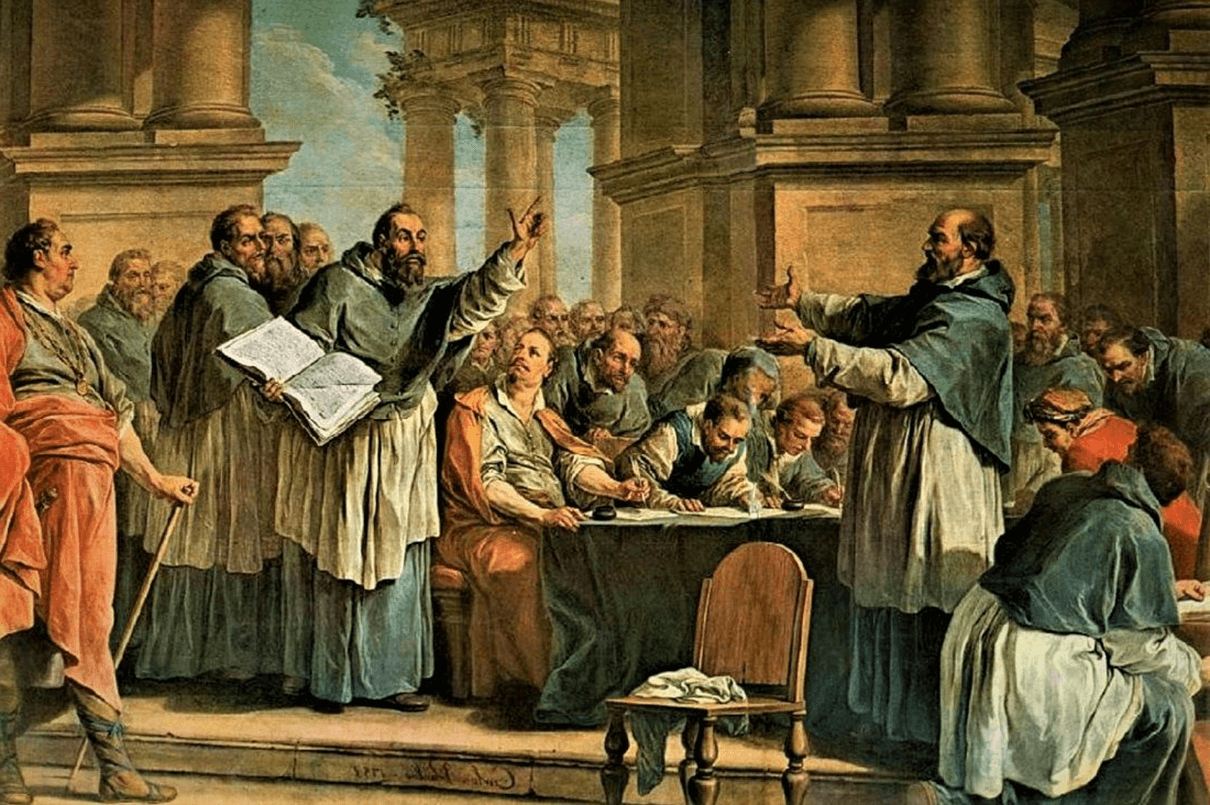
Saint Marcellinus of Carthage was a high-ranking Roman official born in the late 4th century and died on September 13, 413. He held the office of tribune and notary under Emperor Honorius, responsible for religious affairs in North Africa. Sent to Carthage to organize a conference between the Catholics and the Donatists, he presided over the Conference of Carthage in 411, where 286 Catholic bishops and 279 Donatist bishops debated for several days. The conference, held from June 1 to 8, 411, in the basilica of Carthage, produced 76 sessions of debate, transcribed in the "Gesta Collationis Carthaginiensis." This conference, organized under his direction, resulted in a ruling in favor of the Catholics; Emperor Honorius then issued an edict confirming their exclusive legitimacy, leading to the confiscation of 500 Donatist churches. Marcellinus was falsely accused of complicity in a revolt and executed in Carthage on September 13, 413, a few months after the failed uprising of Heraclian against Emperor Honorius, probably on the latter's orders.
Official recognition of Saint Marcellinus
The official recognition of Saint Marcellinus of Carthage rests on his mention in the Roman Martyrology, where he is listed as a martyr and saint, with a feast day set for April 6. Although he was not canonized according to the formal procedures established after the 10th century, his veneration dates back to the early centuries of Christianity, corresponding to what is known as "pre-congregation" recognition. Saint Augustine, who knew Marcellinus personally, considered him a man of faith and praised him in several letters and sermons.
Saint Marcellinus in art and literature
A 6th-century fresco found in a Byzantine church at Damous El Karita (Carthage) shows a bearded figure in a toga, identified by an inscription as "Marcellinus Martyr." In Christian literature, Saint Augustine mentions Marcellinus in several letters, including Epistle 133, as well as in "The City of God". In the Middle Ages, he appears in hagiographic compilations such as the "Liber Pontificalis Africanus" or certain versions of the "Golden Legend," although his role there is often secondary.