February 8: feast of Saint Jacqueline
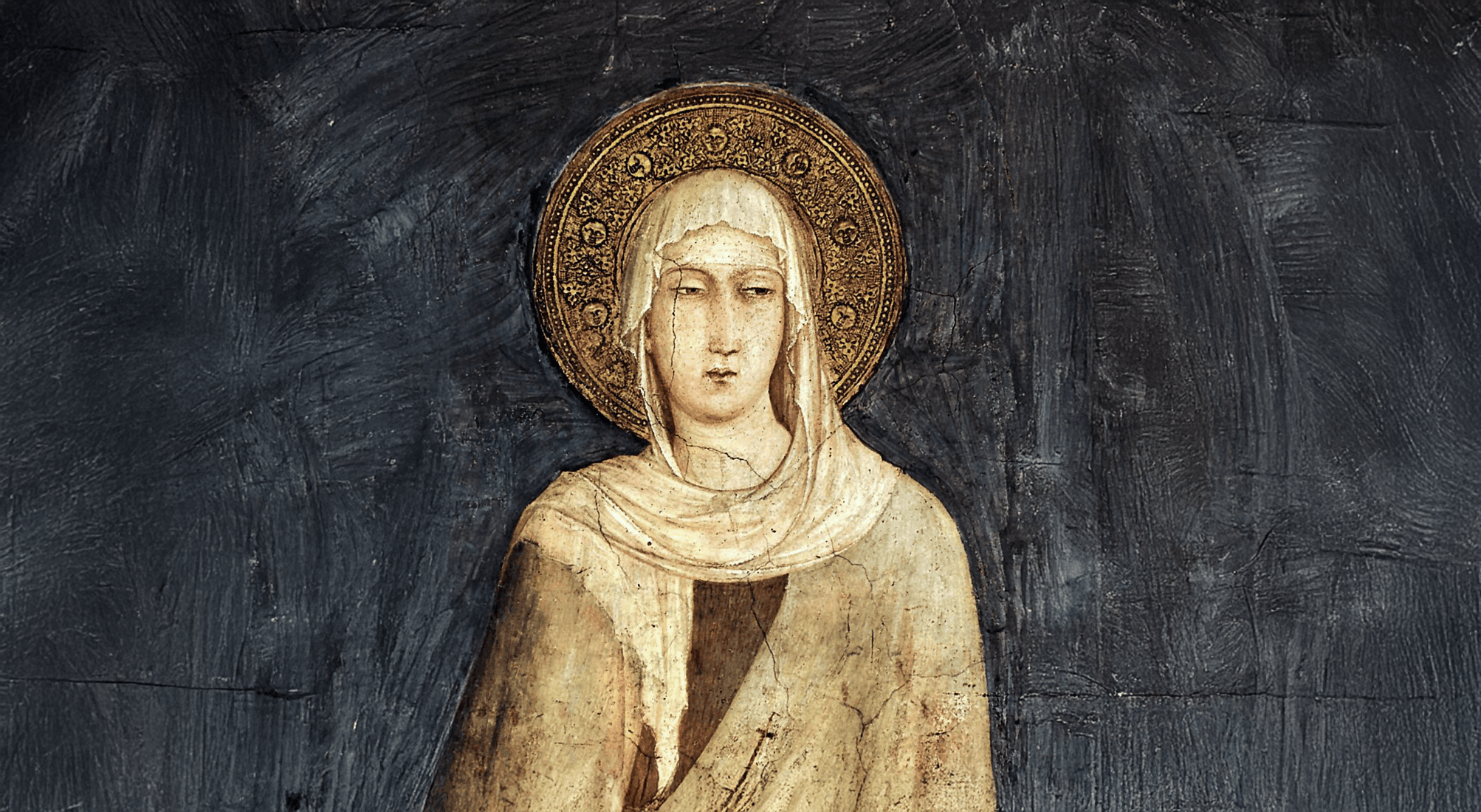
Céline Arétin, head of cultural, women's and environmental topics, February 8, 2026
Who was Saint Jacqueline?
Saint Jacqueline of Septisoles, also called Jacqueline of Settesoli, was a Roman noblewoman of the 13th century. Born around 1190, she married Gratian Frangipani, a powerful lord of Rome, and managed his estates alone after being widowed. Her involvement with Francis of Assisi began after she heard him preach on Capitol Square in Rome. Fascinated, she welcomed him into her home and became one of his most devoted benefactors. In 1226, sensing his end was near, Francis asked his brothers to write to Jacqueline requesting that she come to see him one last time and bring cloth for his shroud and his favourite dessert, an almond cake known as "mostaccioli". But even before the letter reached her, she arrived in Assisi accompanied by her sons with everything Francis had asked for. Exceptionally, she was allowed to enter Francis's bedside, an unusual privilege for a woman, since the Poor Clares and the Franciscan friars lived in a strict cloister.
Celebrations and popular traditions
In Assisi, where she was buried in 1274 near Saint Francis, faithful members of the Franciscan Third Order pay tribute to her memory each year around February 8, the presumed date of her death. In some Franciscan communities, a tradition consists of handing out "mostaccioli", almond and honey biscuits that Jacqueline is said to have brought to Francis of Assisi on his deathbed.
Saint Jacqueline in art and literature
In Franciscan literature, she is mentioned in the "Fioretti of Saint Francis", a collection of accounts of the saint's life dating from the 14th century. There she is described as a pious and generous woman, endowed with an almost prophetic intuition. Other medieval chronicles, such as those of Thomas of Celano, his first biographer, testify to her involvement in the development of the Franciscan Third Order. More recently, novels devoted to the life of Francis of Assisi, such as Saint Francis by Nikos Kazantzakis (1956) or The Joyful Beggar by Louis de Wohl (1958), portray her as a faithful friend and benefactor of the saint.