April 5: Feast of Saint Irene of Thessalonica
Céline Arétin, head of cultural, women's and ecology-related topics, April 5, 2025
Who is Saint Irene of Thessalonica?
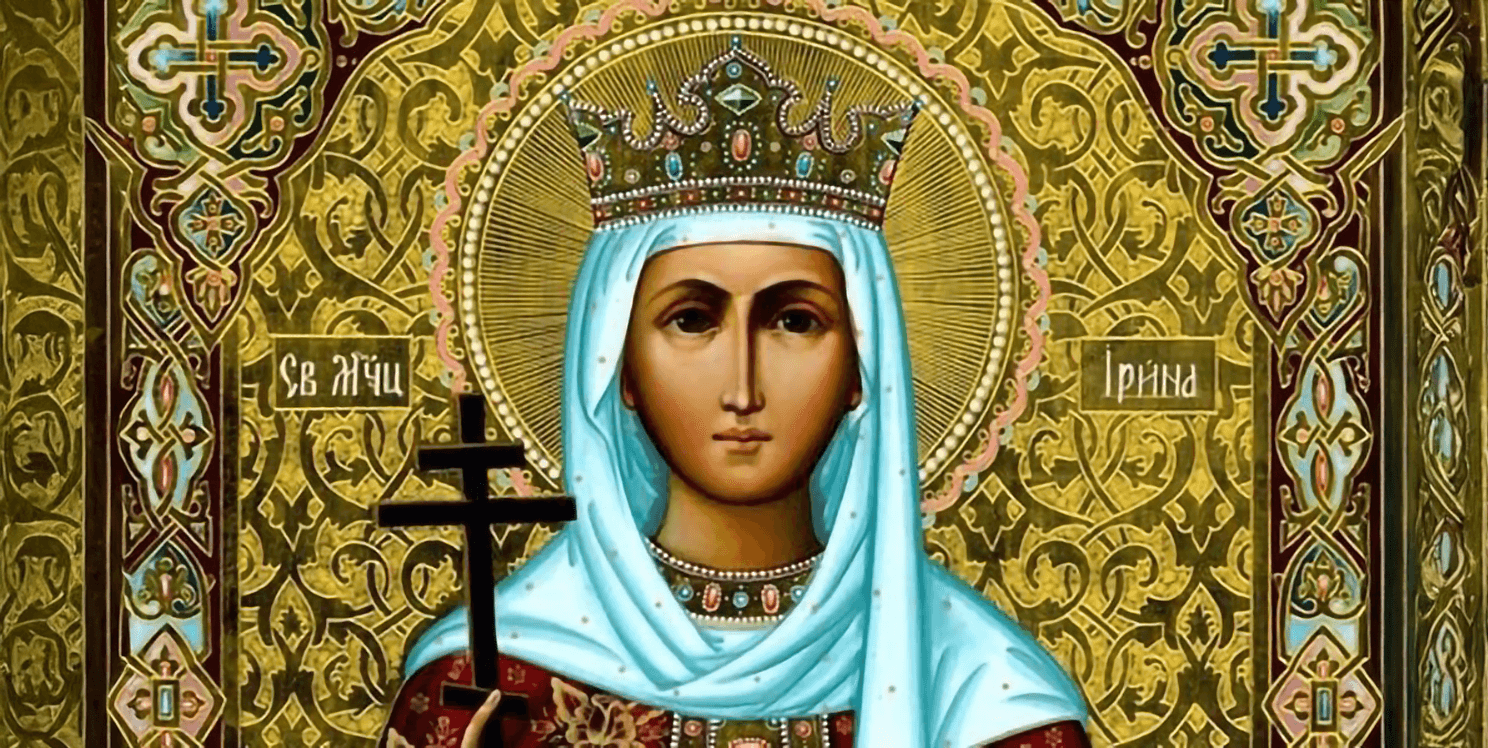
Saint Irene of Thessalonica is a Christian martyr born in the early 4th century in the region of Thessalonica, in Greece, during the persecutions of Diocletian. Known for her courage in the face of the Roman authorities, she was arrested in 304 for refusing to sacrifice to the pagan deities. According to the Acts of the Martyrs, she is said to have endured various tortures, notably immersion in baths of boiling oil, from which she reportedly emerged miraculously unharmed. Finally, Irene was beheaded around the year 304, at the presumed age of about 20. Saint Irene is today regarded as one of the protecting saints of Thessalonica, a city that currently has more than 1 million inhabitants and where several churches are dedicated to her, including the Byzantine church of Saint Irene dating from the 14th century.
Celebrations and popular traditions
The celebrations in honor of Saint Irene of Thessalonica take place every year on April 5, notably in the Orthodox regions of Greece, Russia and Serbia. Among the popular traditions are the lighting of votive candles as well as the distribution of blessed breads called "Artos," believed to bring protection and healing to families.
Official recognition of Saint Irene
The official recognition of Saint Irene of Thessalonica dates back to the first centuries of Christianity, long before the formalization of modern canonization procedures. Her cult was confirmed as early as the Council of Nicaea in 325, which officially recognized the martyrs who had suffered under the persecutions of Diocletian. In the Orthodox Church, she appears in the Synaxarion, the official liturgical calendar listing more than 2,000 saints, where she is celebrated every year on April 5. The Roman Catholic Church also recognizes Saint Irene as a martyr, although her celebration is less widespread there than in the East.
Saint Irene in art and literature
In Thessalonica, a medieval 12th-century fresco located in the church of Saint Demetrios depicts Saint Irene alongside Saint Demetrios and Saint Anysia, illustrating their shared courage in the face of the Roman persecutions. In Orthodox hagiographic literature, she is mentioned in several ancient collections such as the Greek "Synaxarion" and the "Lives of the Saints" by Demetrius of Rostov in the 17th century, works that remain important references today in Russian and Greek Orthodox monasteries.