February 6: Feast of Saint Dorothy
Céline Arétin, head of cultural, women's and ecology-related topics, February 6, 2026
Who was Saint Dorothy?
Saint Dorothy of Caesarea, a third-century Christian martyr, was born in Cappadocia (present-day Turkey) and was persecuted under the emperor Diocletian. Arrested by the governor Sapricius, she refused to sacrifice to the pagan gods and endured several tortures: she was first whipped until she bled, then hung by her arms and burned with flaming torches. Reeds were driven under her fingernails, but she continued to pray, provoking the fury of her executioners. Today she is the patron saint of gardeners and florists.
Miracles associated with Saint Dorothy
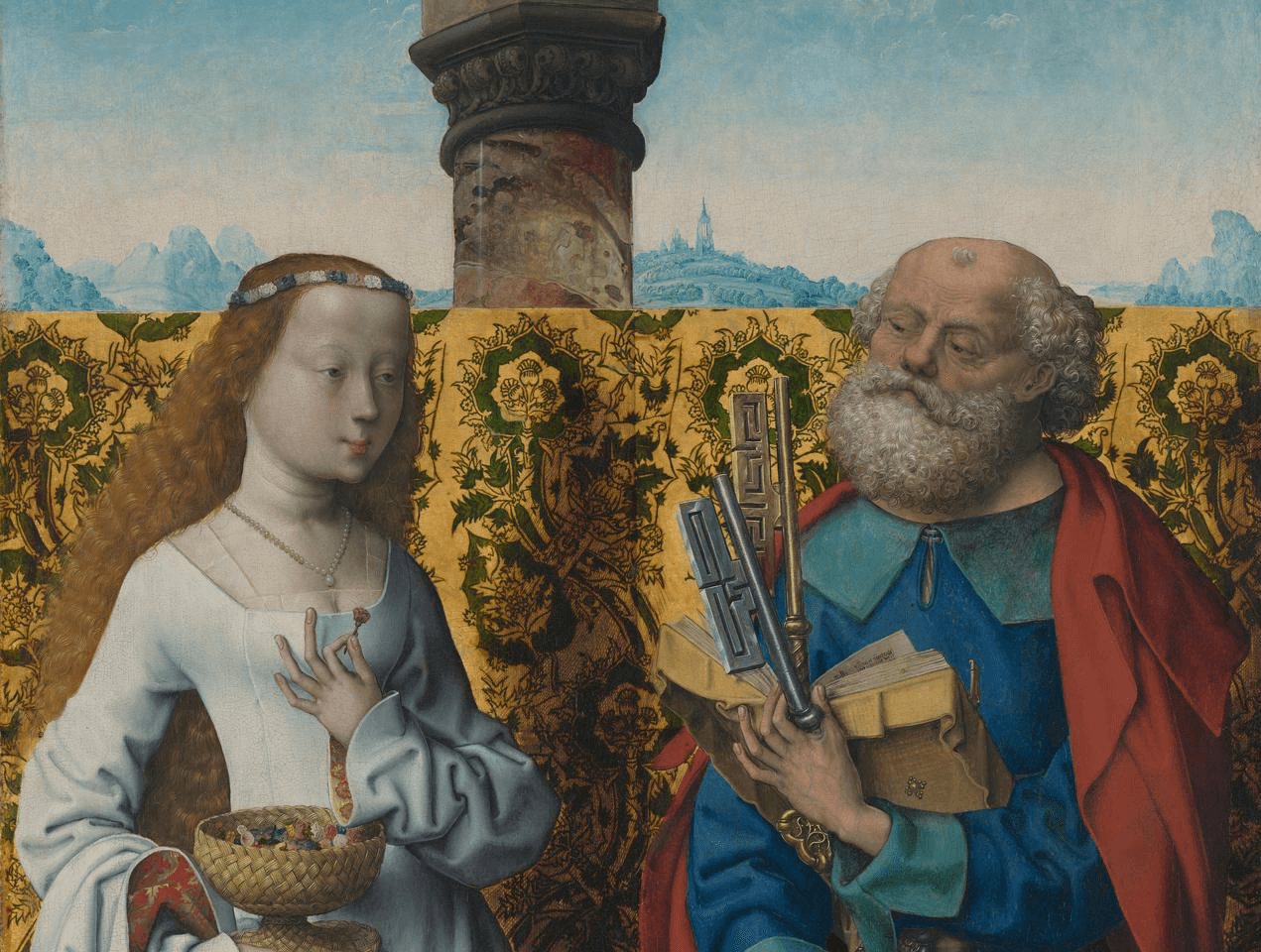
The most famous miracle is the one that occurred at the moment of her martyrdom: as she was about to be beheaded in Caesarea, a pagan lawyer named Theophilus mocked her by asking her to send him fruits and flowers from paradise. According to legend, a child dressed in white suddenly appeared, holding a basket containing three apples and three roses in the middle of winter. This basket was carried to Theophilus who, overwhelmed by this miracle, converted immediately and was executed for his new faith.
Celebrations and popular traditions
In Italy, particularly in Rome where the church of Santa Dorotea is dedicated to her, a solemn Mass is held, followed by a distribution of blessed roses to the faithful. In Bohemia, in the Middle Ages, apples and flowers were offered to young girls on her feast day, in memory of the miracle of the roses and fruits sent to Theophilus. In Bavaria, an old custom held that young women would place a rose under their pillow on the eve of February 6 to attract a happy marriage.
Official recognition of Saint Dorothy
The martyrdom of Saint Dorothy, which took place around the year 311 under the persecutions of Diocletian, was quickly recounted in the earliest hagiographic accounts. In the West, her story was popularized by the Golden Legend of Jacobus de Voragine in the 13th century. Although she was removed from the Roman liturgical calendar in 1969 due to a lack of historical evidence, Saint Dorothy remains a saint venerated in several dioceses.
Saint Dorothy in art and literature
Among the most famous works is the painting Saint Dorothy by Francisco de Zurbarán (around 1640), where she appears as a young woman in prayer holding a crown of flowers. In Italy, 14th-century frescoes, such as those in the church of Santa Dorotea in Rome, depict her torture and the appearance of the angelic child. Albrecht Dürer, the famous German engraver, also devoted a print to her in 1501, detailing the moment when she receives the fruits of paradise. Baroque poets, such as Pedro Calderón de la Barca in Spain, also dedicated religious dramas to her.