April 9: feast of Saint Casilda
Céline Arétin, in charge of cultural, women's and environmental topics, April 9, 2025
Who was Saint Casilda?
Saint Casilda of Toledo was an 11th-century Christian saint said to have been the daughter of a Muslim king of Toledo, most often identified as Al-Ma'mun. Raised in the royal palace during the period of Muslim rule in Spain, she is remembered above all for the compassion she showed to the Christian prisoners held in her father's dungeons. According to tradition, the young princess secretly brought them bread and food, at great personal risk. She died around the year 1050, reportedly at a very advanced age, and her cult has been especially strong in the region of Burgos ever since.
The miracle of the roses
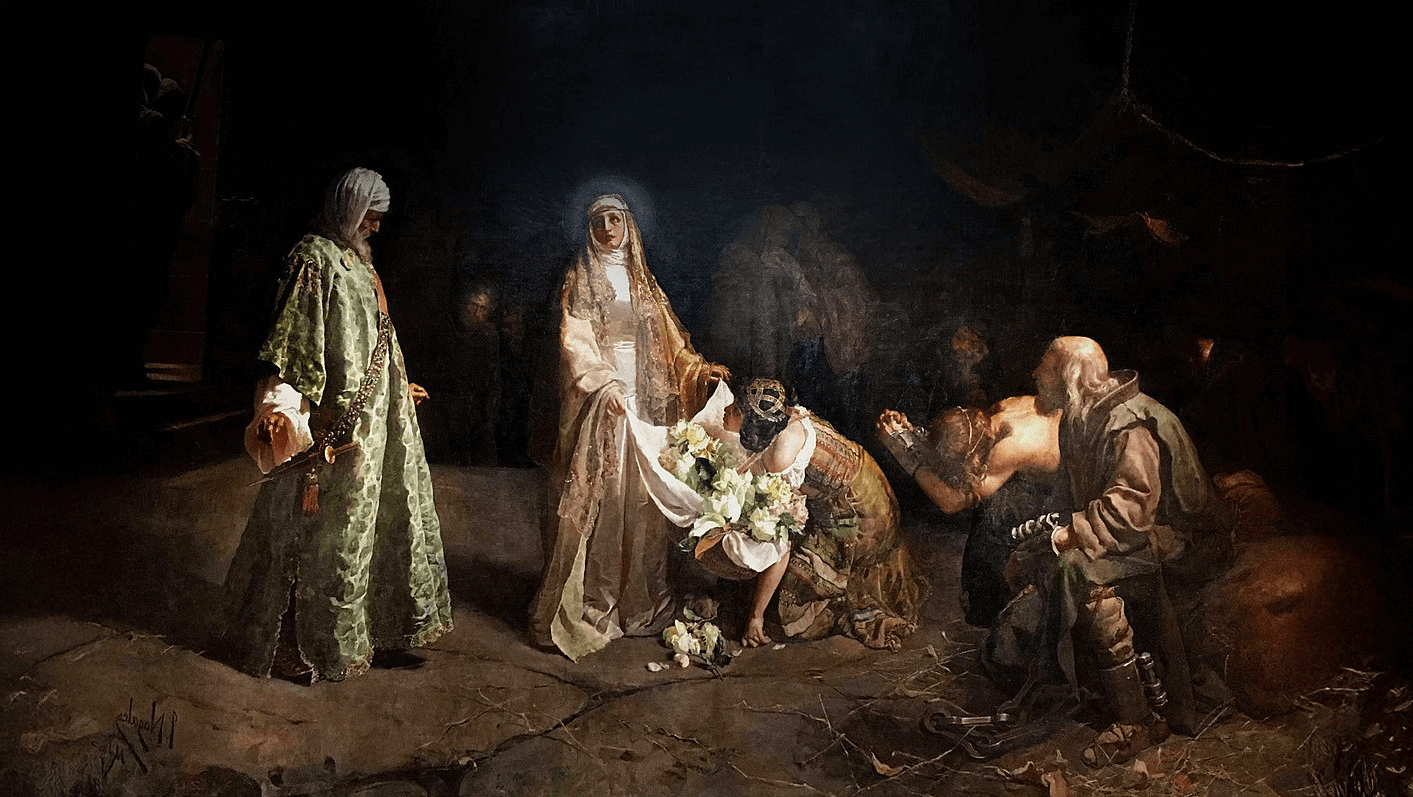
The most famous episode of her life is the miracle of the roses. As Casilda was carrying bread hidden in her clothes to the Christian captives, she was stopped by palace guards and ordered to reveal what she was concealing. When she opened her garment, the loaves of bread had miraculously turned into roses, allowing her charity to go undiscovered. This legend, told in several forms across medieval Europe, closely echoes the accounts associated with other holy women, and it made Casilda an enduring symbol of hidden generosity toward the poor and the imprisoned.
Conversion and healing
Tradition holds that Casilda fell seriously ill and, finding no cure among the physicians of Toledo, travelled north to the miraculous waters of the lake of San Vicente, near Briviesca, in Christian territory. Healed after bathing in its waters, she chose to be baptised a Christian and never returned to her father's court. She is then said to have lived the rest of her long life as a hermit near the shrine, devoted to prayer and penance. Because of her cure, she has traditionally been invoked against illness and infertility, and pilgrims have long visited her sanctuary of Santa Casilda in the province of Burgos.
Veneration of Saint Casilda
Saint Casilda is honoured by the Catholic Church on April 9, the date shared with Saint Waldetrudis. Her relics are kept at the hermitage of Santa Casilda, a well-known place of pilgrimage in the Spanish province of Burgos. She remains a popular figure of Spanish devotion, celebrated as a patroness of those who are ill and as a model of quiet charity that crossed the religious divide of medieval Spain.