February 19: International Whale Day
Céline Arétin, culture, women's issues and environment correspondent, February 19, 2026
Why protect whales
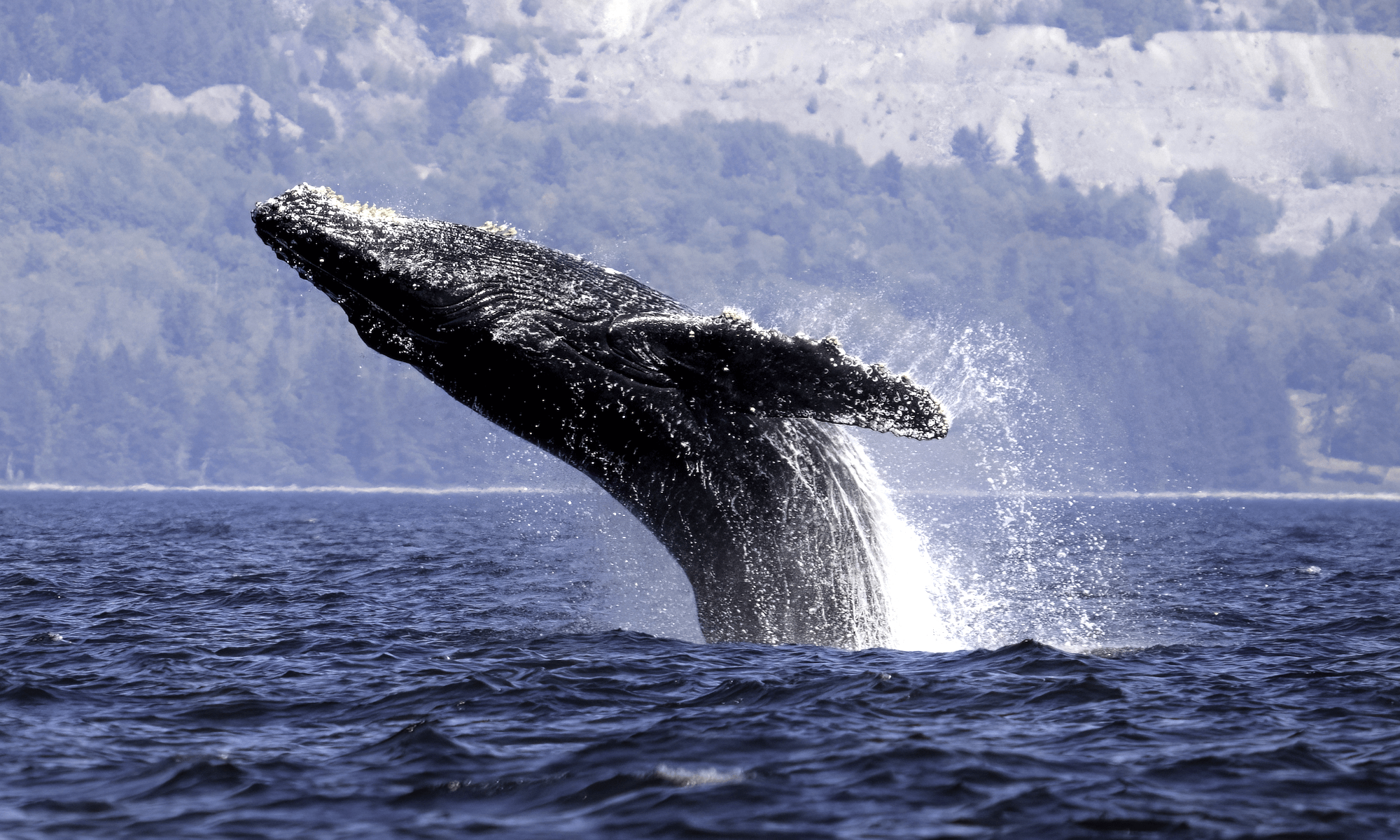
Whale feces, rich in iron and nitrogen, stimulate the growth of phytoplankton, which absorbs millions of tonnes of CO₂ every year and produces more than 50% of the world's oxygen. In Mauritania, sperm whales help structure the food chain by regulating giant squid populations, which has a direct impact on the survival of commercial fish species such as tuna. In the Gulf of Maine, humpback whales attract herring and mackerel through the bubble-net feeding technique they use to hunt. By encircling their prey with rings of bubbles before engulfing them, they gather schools of fish together, making them easier to catch. When they die, their carcasses sink to the ocean floor, providing nutrients to thousands of organisms, including sleeper sharks and Osedax worms, a phenomenon known as a "whale fall."
Threats facing whales today
Commercial whaling, although theoretically banned since 1986 by the International Whaling Commission, continues in certain countries such as Japan, Norway and Iceland. In 2019, Japan officially resumed hunting minke whales, with an annual quota of 227 catches, despite international disapproval. Plastic pollution is another major threat: in 2018, a sperm whale washed up in the Philippines with 40 kg of plastic in its stomach, preventing its digestive system from functioning. In addition, ghost fishing nets are responsible for many accidental deaths: every year, more than 300 North Atlantic right whales become trapped in fishing gear off the coasts of Canada and the United States. Furthermore, global warming is altering ocean currents and reducing the availability of their food. For example, in Antarctica, the decline of krill due to melting ice threatens blue whale populations. Finally, collisions with ships are a frequent cause of death: in the Strait of Gibraltar, orcas suffer a growing number of accidents with cargo ships, resulting in fatal injuries. In response, some regions, such as California, have introduced mandatory speed reductions for ships in whale migration zones.
The most endangered whale species
The North Atlantic right whale is one of the most endangered, with fewer than 350 individuals recorded in 2023. This species suffers particularly from collisions with ships and entanglement in fishing nets off the coasts of Canada and the United States. The sei whale, hunted intensively in the 20th century, is still a victim of commercial whaling in Norway and Japan, where several dozen specimens are caught each year under the pretext of "scientific research." The blue whale, the largest animal living on Earth, has seen its population fall by more than 90% due to industrial whaling in the last century.