January 18: Elephant Duel Day in Thailand
Céline Arétin, culture, women's issues and environment correspondent, January 18, 2025
Origins of Elephant Duel Day
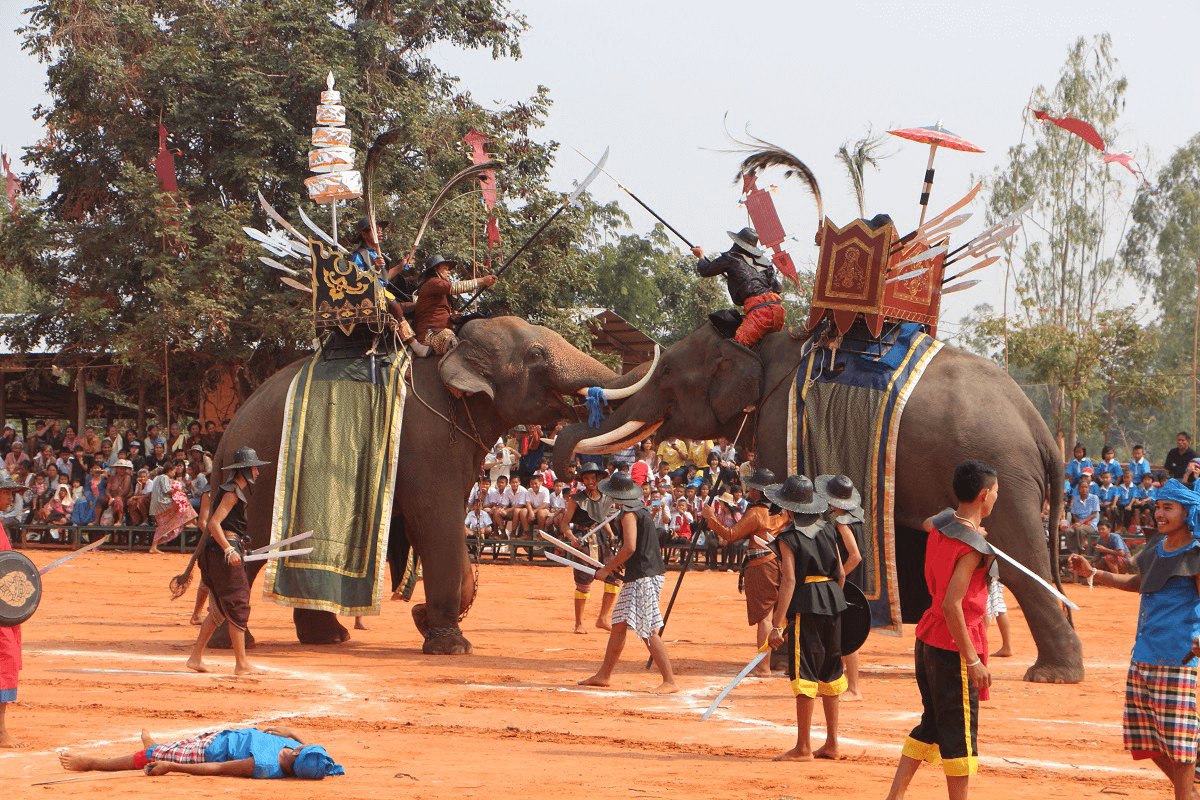
"Elephant Duel Day" in Thailand celebrates an event from January 25, 1593, when King Naresuan the Great, mounted on his war elephant "Chao Phraya Chaiyanuphap," fought a duel against Minchit Sra, a Burmese prince, mounted on his elephant "Phraya Nga Thong." The battle reached its climax when Naresuan, armed with a halberd, struck the Burmese prince in the head, killing him and breaking Burmese domination over the kingdom of Ayutthaya.
Where does Elephant Duel Day take place?
Celebrations for "Elephant Duel Day" take place mainly in Nong Sarai, in Suphanburi province, where the duel took place. The King Naresuan memorial park is transformed with a reenactment of the battle, featuring elephants decorated with gold embroidery, warriors in royal attire, and period weapons. In Bangkok, at the Grand Palace, temporary exhibits include 16th-century relics, such as fragments of elephant armor and manuscripts recounting the event. Ayutthaya, the former capital, holds ceremonies at Wat Phu Khao Thong, where King Naresuan is said to have prayed before the duel. In Chiang Mai, the Mae Sa elephant camp puts on a demonstration in which elephants recreate military maneuvers, such as the "Lanna Phalanx" (defensive formation). In Phitsanulok, Wat Nang Phaya temple displays a replica of the royal throne used by Naresuan during his military campaigns, as well as a collection of coins minted with his likeness. Finally, local markets, such as Talad Suphan, offer traditional dishes, notably "khao kluk kapi" (rice flavored with shrimp paste), recalling the meals eaten by Ayutthaya's troops.
The symbolism of elephants in Thailand
White elephants, a symbol of divine power, were so prized that they once appeared on Thailand's national flag. Additionally, King Rama IX kept a white elephant named "Phra Savet Adulyadej Paholbhinayak" in the royal enclosure of Dusit Palace. In temples such as Wat Chang Lom in Sukhothai, dozens of elephant statues surround the base of the stupas to symbolize Buddhist faith. Well-known companies, such as Chang Beer and Thai Airways, use elephant imagery in their logos and advertising campaigns to convey values of tradition and reliability.
Stories and legends surrounding the Elephant Duel
One of the most famous stories tells that, before the battle of Nong Sarai in 1593, King Naresuan, accompanied by his royal elephant "Chao Phraya Chaiyanuphap," is said to have prayed at Wat Phu Khao Thong in Ayutthaya, asking the spirits for their blessing to protect his kingdom. One legend claims that his elephant, upon seeing the enemy army, let out a powerful trumpet call, interpreted as a sign of imminent victory. Another account states that, during the duel, Naresuan challenged Minchit Sra, calling him a coward for not fighting in single combat, an insult that is said to have forced the Burmese prince to accept the challenge. During the fight, the two elephants are said to have battled fiercely, their tusks clashing, until Naresuan's elephant managed to unbalance his opponent, allowing the king to deliver the fatal blow with his halberd. Some versions suggest that the king was guided by the spirit of his ancestor, King Ramkhamhaeng, who is said to have appeared to him in the form of a white elephant the night before the duel.