February 22: Cat Day in Japan
Ingrid Nováková, international affairs specialist, February 22, 2026
Why February 22?
Cat Day in Japan (Neko no Hi, 猫の日) is celebrated on February 22 because of a play on words based on the Japanese pronunciation of the number "2", "ni," which echoes a cat's meow, "nyan nyan nyan" (にゃんにゃんにゃん).
History of Cats in Japan
Brought to Japan from China during the Heian era (794-1185), cats were used to protect sacred paper scrolls from rats in Buddhist temples. Emperor Uda (867-931) owned one of the country's earliest documented cats. Cats also appear in literature, in novels such as "I Am a Cat" (吾輩は猫である, 1905) by Natsume Sōseki, which tells the story of a cat observing Japanese society.
Temples and Shrines Dedicated to Cats
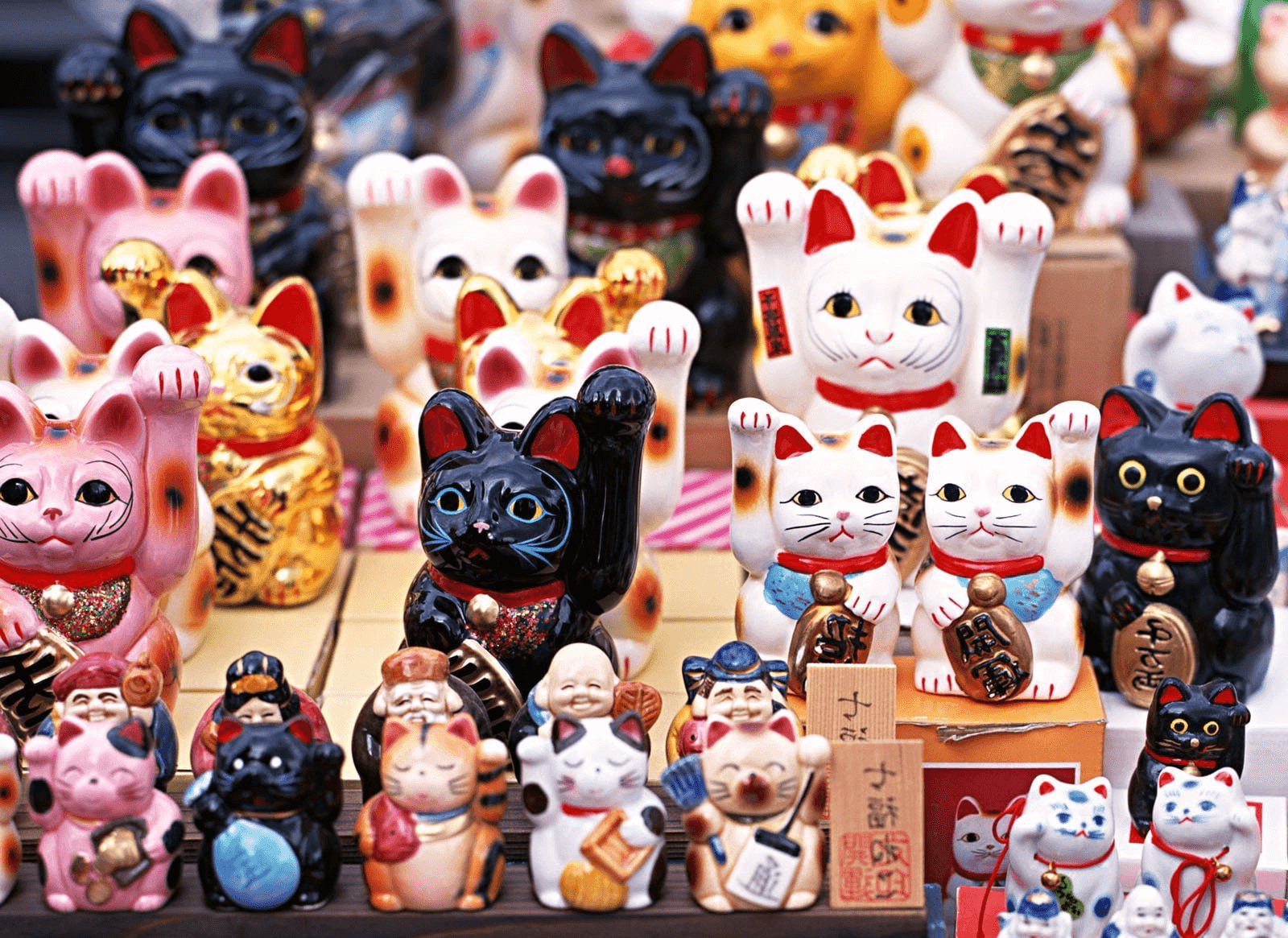
According to legend, the famous statue of a cat raising its paw in welcome originates from Gotoku-ji temple in Tokyo, where a hungry monk was said to have been saved by a cat that lured in a passing lord. This attachment to cats also shows up at Nyan Nyan Ji (literally "Meow Meow Temple") in Kyoto, a shrine where a feline "high priest," currently a cat named Koyuki, greets visitors. On Tashirojima, the "cat island" in Miyagi prefecture, stands Neko Jinja (Cat Shrine). Imado Shrine in Asakusa is another major site for the Maneki-neko, said to grant wishes in love.
Cat Cafés
Cat cafés (neko cafés, 猫カフェ) are an institution in Japan, letting visitors enjoy a tea or coffee in the company of cats. Japan's first neko café, Cat's Store, opened in 2004 in Osaka. Since then, these establishments have multiplied, especially in Tokyo, where dozens have opened. Among the most famous is MoCHA, a chain with locations in Shibuya, Akihabara, and Ikebukuro. Strict rules apply in these cafés: no waking the cats, no picking them up by force, and no flash photography. The craze for these establishments has also inspired variations, such as owl cafés (fukurou cafés) or hedgehog cafés (Harry Café in Harajuku).
See Also
February 22: International Cat Day