Feast of the Epiphany, January 6, 2026
David Chelly, January 5, 2026
What is the Epiphany?
The Epiphany is a great Christian feast whose name means "manifestation." It celebrates the moment when Jesus is recognized by non-Jews, symbolized in the West by the visit of the Magi guided by the star. The names Melchior, Gaspard, and Balthazar come from popular tradition, since the Gospels give neither their names nor their number.
Date and origin
The Epiphany falls on January 6, twelve days after Christmas. It is attested very early in Christianity, notably in the East from the 4th century onward, where it was long associated also with the baptism of Christ. In the West, the meaning became mainly focused on the adoration of the Magi, and January 6 remained the reference date. In France, the religious celebration is often moved to the Sunday falling between January 2 and 8, which explains why the galette is mainly shared on the weekend: in 2026, the first Sunday after January 1 is January 5, 2026, even though the traditional date remains January 6, 2026.
Why do people eat the galette des Rois?
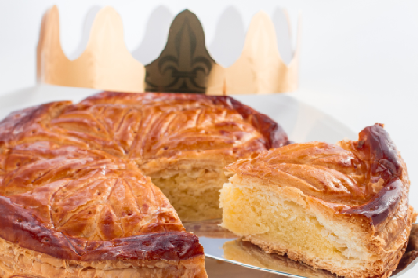
The galette has become the gourmet symbol of the Epiphany in France, with a simple idea: to gather and share. The hidden fève (charm) harks back to very old customs of a "king for a day," already found in antiquity, and later to medieval customs that popularized the drawing of lots. Today, whoever finds the fève receives the crown, and the galette carries on the spirit of the feast: conviviality, play, and sharing.
The fève, the crown, and traditions in France
The fève was originally a real broad bean, before being replaced by small porcelain or plastic figurines. The custom of choosing the shares "at random" became fixed with the child who slips under the table to designate who receives each share, in order to avoid cheating. In some families, an extra share is also kept, sometimes called the "poor man's share," symbolically intended for an unexpected guest.
Galette or brioche: one feast, several recipes
Depending on the region, the Epiphany is not tasted the same way everywhere. In much of the north and west, the puff-pastry galette with frangipane filling is the most common. In the south, people instead share a crown-shaped brioche flavored with orange blossom and decorated with candied fruit, sometimes called "royaume" or "couronne des rois." Whatever the recipe, the idea remains the same: to mark this moment in the calendar with a shared dessert, simple to understand and easy to pass down.