Feast of the Immaculate Conception
Monday, December 8, 2025
What is the Feast of the Immaculate Conception?
The Feast of the Immaculate Conception is a Catholic religious celebration that honors the belief that Mary, the mother of Jesus Christ, was conceived without original sin. It is celebrated on December 8 every year.
According to Catholic doctrine, Mary was preserved by a special grace of God from original sin from the very moment of her conception. This means that, unlike all other human beings who inherit the original sin of Adam and Eve, Mary was born pure and without stain of sin.
This belief is not based on biblical accounts but rests on Church tradition, and was made dogma by Pope Pius IX in 1854 in the papal bull "Ineffabilis Deus." This decision came after long centuries of theological debate and is founded on the idea that Mary, as the "new Eve," had to be just as pure and sinless as Eve before the fall, in order to give birth to Christ without the stain of original sin.
The feast is celebrated with Masses and processions in many Catholic countries. It is also a day of prayer, reflection, and, in some places, a public holiday.
Origins of the Feast of the Immaculate Conception
The origin of the Feast of the Immaculate Conception dates back to the early centuries of Christianity, although the belief was only formalized as a dogma in the 19th century.
Early centuries (after Jesus Christ): The writings of the Church Fathers, such as Saint Augustine, allude to the purity and holiness of Mary, but without explicitly formulating the doctrine of the Immaculate Conception.
Middle Ages: The celebration of Mary's purity begins to take a more structured form. The concept of her sinless conception begins to be discussed and debated by theologians. Duns Scotus, a 13th-century Franciscan theologian, is one of the main defenders of the doctrine. He argues that the Immaculate Conception is necessary for the dignity of the Mother of God.
1476: Pope Sixtus IV extends the celebration of the Feast of the Immaculate Conception to the universal Church, although he had not yet defined the doctrine as an official dogma.
17th and 18th centuries: Belief in the Immaculate Conception grows in popularity and is celebrated in an increasing number of regions.
1854: Pope Pius IX promulgates the papal bull "Ineffabilis Deus," declaring the Immaculate Conception a dogma of the Catholic Church. This declaration is the result of centuries of theology and Marian devotion.
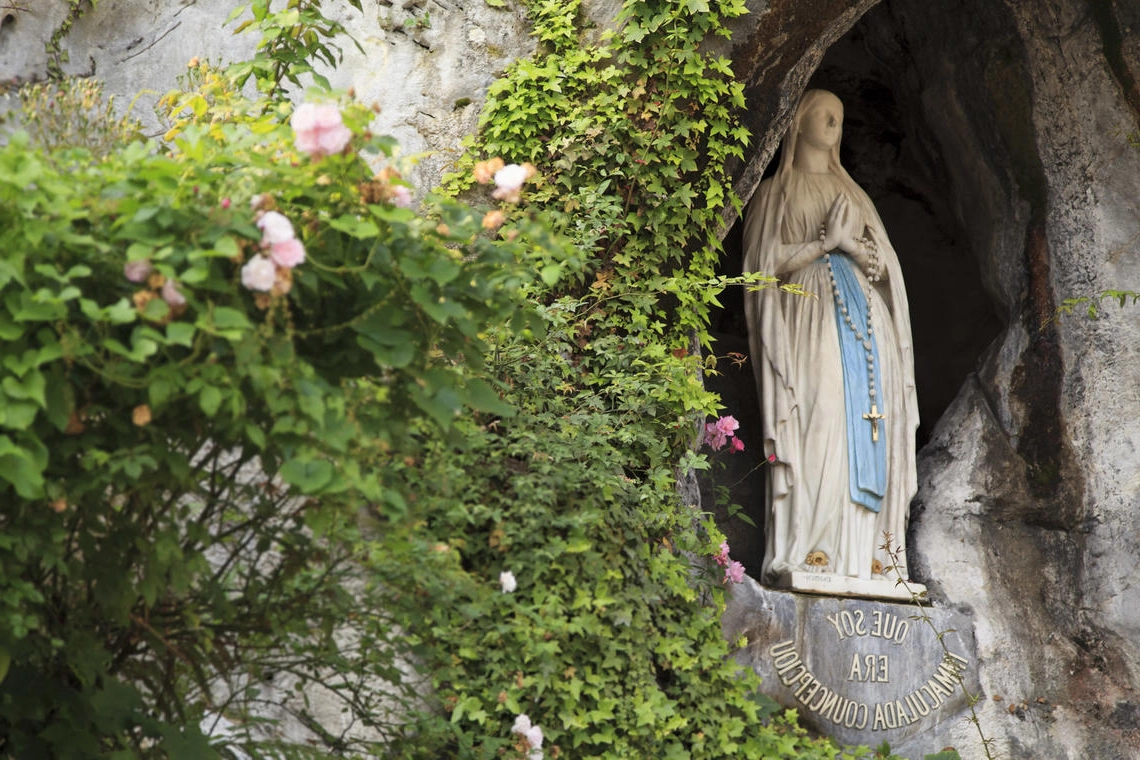
After 1854: The Feast of the Immaculate Conception becomes a major day of celebration in the Catholic liturgical calendar. In 1858, Bernadette Soubirous, in her apparitions at Lourdes, reported that the Virgin presented herself to her as the Immaculate Conception, reinforcing belief in and devotion to this Marian mystery.
Prayers for the Feast of the Immaculate Conception
Prayer of the Immaculate Conception: This specific prayer honors the purity of Mary and asks for her intercession.
O God, who by the Immaculate Conception of the Virgin, prepared a worthy dwelling for your Son, we pray to you: just as, through the foreseen death of that same Son, you preserved her from every stain, grant that, through her intercession, we too may come to you in purity of heart. Amen.
The Rosary: Reciting the Rosary is a common practice during the Feast of the Immaculate Conception. The Rosary meditates on the joyful, sorrowful, glorious, and luminous mysteries of the life of Jesus and Mary, with particular attention given to the joyful mysteries, which include the Annunciation, a key moment linked to Mary's purity and obedience.
The Litany of the Blessed Virgin: Also known as the Litany of Loreto, this prayer invokes various titles of the Virgin Mary, including "Mirror of Justice," "Seat of Wisdom," and "Cause of our Joy." During the Feast of the Immaculate Conception, the title "Queen conceived without original sin" is especially highlighted.
The Angelus prayer: The Angelus is traditionally recited three times a day (morning, noon, and evening) and commemorates the Annunciation. The prayer recalls the moment when the angel Gabriel announces to Mary that she will conceive Jesus by the Holy Spirit.
Offering of flowers and other gestures of devotion: In some cultures, it is traditional to offer flowers to statues of the Virgin Mary or to take part in processions in her honor on the day of the Immaculate Conception.
The conception of Mary
The conception of Mary, also known as the Immaculate Conception, is a doctrine of the Roman Catholic Church which affirms that Mary, the mother of Jesus, was conceived without original sin.
Definition of the Immaculate Conception: The Immaculate Conception does not refer to the conception of Jesus, which is a separate belief known as the Virginity of Mary. Instead, it concerns the conception of Mary herself in the womb of her mother, Saint Anne. The doctrine states that from the very first instant of her conception, Mary was preserved free from any stain of original sin by a special grace of God, in anticipation of the merits of Jesus Christ.
Theological foundations: Although the Bible does not explicitly mention the Immaculate Conception, Catholic theologians rely on verses such as Genesis 3:15 (the protoevangelium) and the angel Gabriel's greeting to Mary in Luke 1:28 ("Hail, full of grace") to support this doctrine.
Historical development: Belief in Mary's exceptional holiness existed from the earliest centuries of Christianity. However, the specific concept of the Immaculate Conception developed over time, with significant theological debates on the question. Theologians such as Duns Scotus played a crucial role in shaping the doctrine as it is understood today.
Dogmatization: The doctrine was dogmatized, that is, declared an official and unquestionable truth of faith of the Church, by Pope Pius IX in the papal bull "Ineffabilis Deus" in 1854. This was done after a long period of debate and theological reflection, as well as following popular support and the desire of many faithful and theologians.
Celebration and veneration: The Feast of the Immaculate Conception is celebrated on December 8. Mary, as the Immaculate One, is venerated for her purity and unique closeness to God and Jesus. This day is observed with Masses, special prayers, processions, and in some countries, is considered a public holiday.
See also
-
Similar feasts
-
Useful sections