Feast of the Assumption 2026
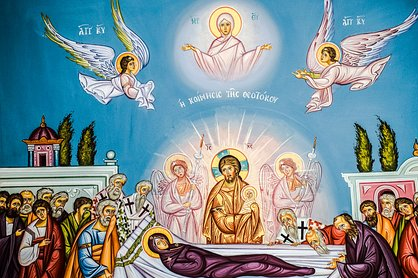
David Chelly, January 15, 2026
Date of the Feast of the Assumption
The Assumption is celebrated every year on August 15. In 2026, it falls on a Saturday. In several countries, including France, it is a public holiday, which explains the importance of this date in the religious calendar as well as in social life, with numerous Masses, processions, and local gatherings.
What is the Assumption
The Assumption is a Christian feast that commemorates the glorification of Mary, mother of Jesus, taken up into heaven at the end of her life. The Catholic faith speaks of Mary's elevation "body and soul," which distinguishes the Assumption from other Marian commemorations and makes it one of the great feasts of the liturgical calendar.
History and origin
Marian celebrations existed very early in the East, notably around the "Dormition" of Mary, and the feast then spread to the West during the Middle Ages, gradually becoming established. The dogma of the Assumption was proclaimed by Pope Pius XII in 1950, which clearly fixed Catholic doctrine on this point. Over the centuries, the feast took on a major place, both liturgical and cultural, in many countries with a Catholic tradition.
Role of Saint Clotilde
Saint Clotilde, queen of the Franks, is mainly associated with the spread of Christianity among the Franks through her influence on Clovis. Her era falls within the building of a lasting Christian piety in Gaul, where devotion to the Virgin later took on an important place. This is not a direct link to the institution of the feast of the Assumption, but rather a historical context that helped root Christian practices, including Marian veneration.
Difference between the Assumption and the Ascension
The Assumption concerns Mary, taken up into heaven at the end of her life, while the Ascension concerns Jesus, who rises into heaven forty days after Easter. Both feasts speak of an elevation, but they do not concern the same person, nor do they carry the same theological meaning.