March 20: International Francophonie Day
Céline Arétin, culture, women's issues and environment correspondent, March 20, 2025
Origin of International Francophonie Day
International Francophonie Day, celebrated every March 20, was established in 1988 by the International Organization of La Francophonie (OIF) to mark the creation of the Agency for Cultural and Technical Cooperation (ACCT) in 1970 in Niamey (Niger), the first institutional milestone of La Francophonie.
Member countries of La Francophonie
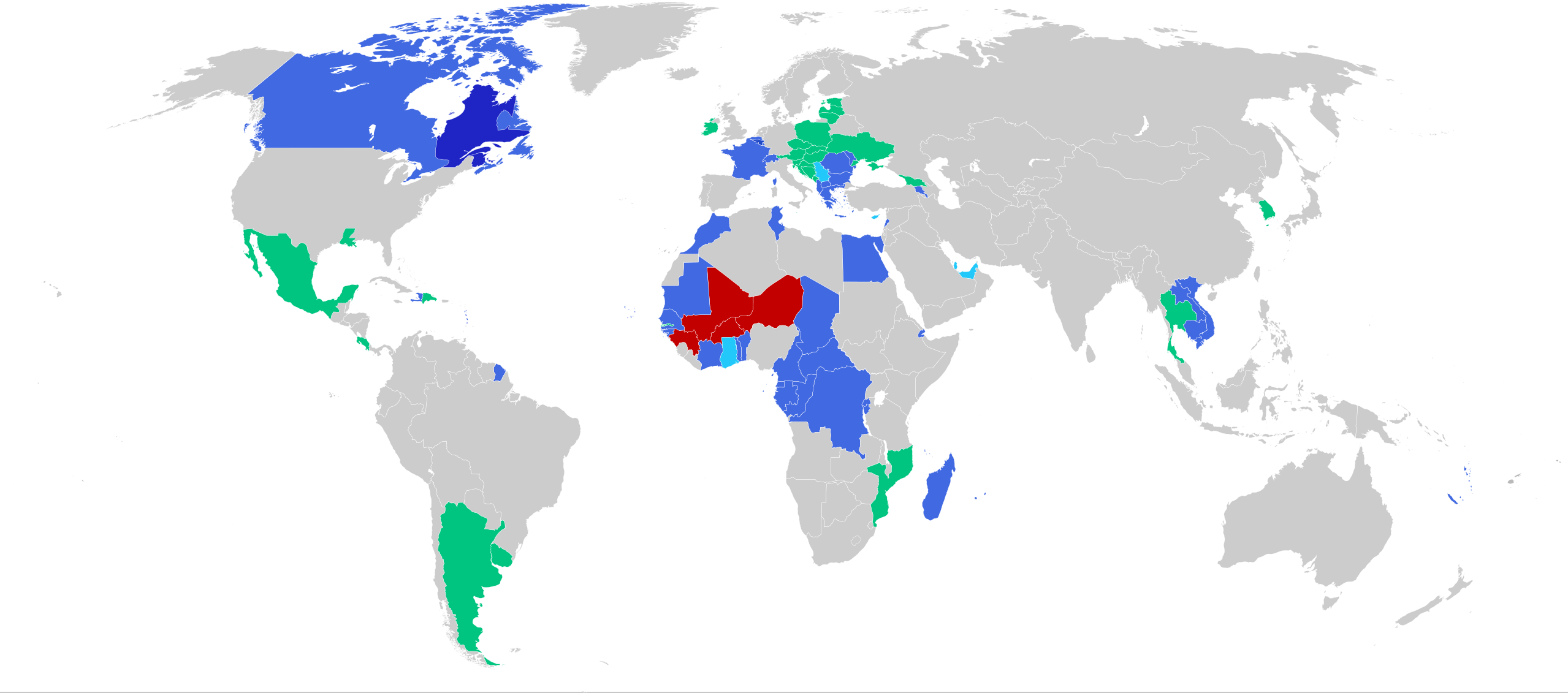
There are 88 member countries of La Francophonie, including full members, associate members and observers. Among the full members are nations where French is an official language, such as France, Canada (notably Quebec and New Brunswick), Belgium and Switzerland. Other African countries such as Senegal, Côte d'Ivoire and Gabon are part of this organization due to their large French-speaking population. Benin, Burkina Faso, Togo, Cameroon and Mali are also active members and take part in the OIF's educational and cultural programs.
Associate members include countries where French is not an official language but where there is a strong French-speaking community or historical ties to the French language. For example, Armenia, Greece and Cyprus are associate members due to their close relations with French-speaking culture. Observers include nations that, while having no direct linguistic ties to French, are interested in cultural and economic exchanges with the French-speaking world. In 2018, Argentina and Ireland joined this category.
International Organization of La Francophonie (OIF)
The OIF works to promote the French language, peace, democracy and human rights. In 2017, it launched the "Libres ensemble" program to encourage young people to commit to solidarity. The OIF also supports education, notably through the Institute of La Francophonie for Education and Training (IFEF), which supports teacher training in several sub-Saharan African countries. In Central Africa, the OIF has set up French-language resource centers in universities in Chad and Congo to promote access to books in French. In Tunisia, the organization has supported training in French-language journalism to promote freedom of expression and independent media. In Lebanon, the OIF contributed to the renovation of French-language public libraries affected by the Beirut port explosion in 2020. On the economic front, the OIF has launched the "Entreprendre en Francophonie" program, which supports young entrepreneurs through training, funding and competitions. This program has notably helped startups from Benin, Senegal and Vietnam develop their projects in sectors such as sustainable agriculture and new technologies.