January 17: Patras Carnival Begins
Céline Arétin, in charge of cultural, women's and environmental topics, January 17, 2025
What is the Patras Carnival?
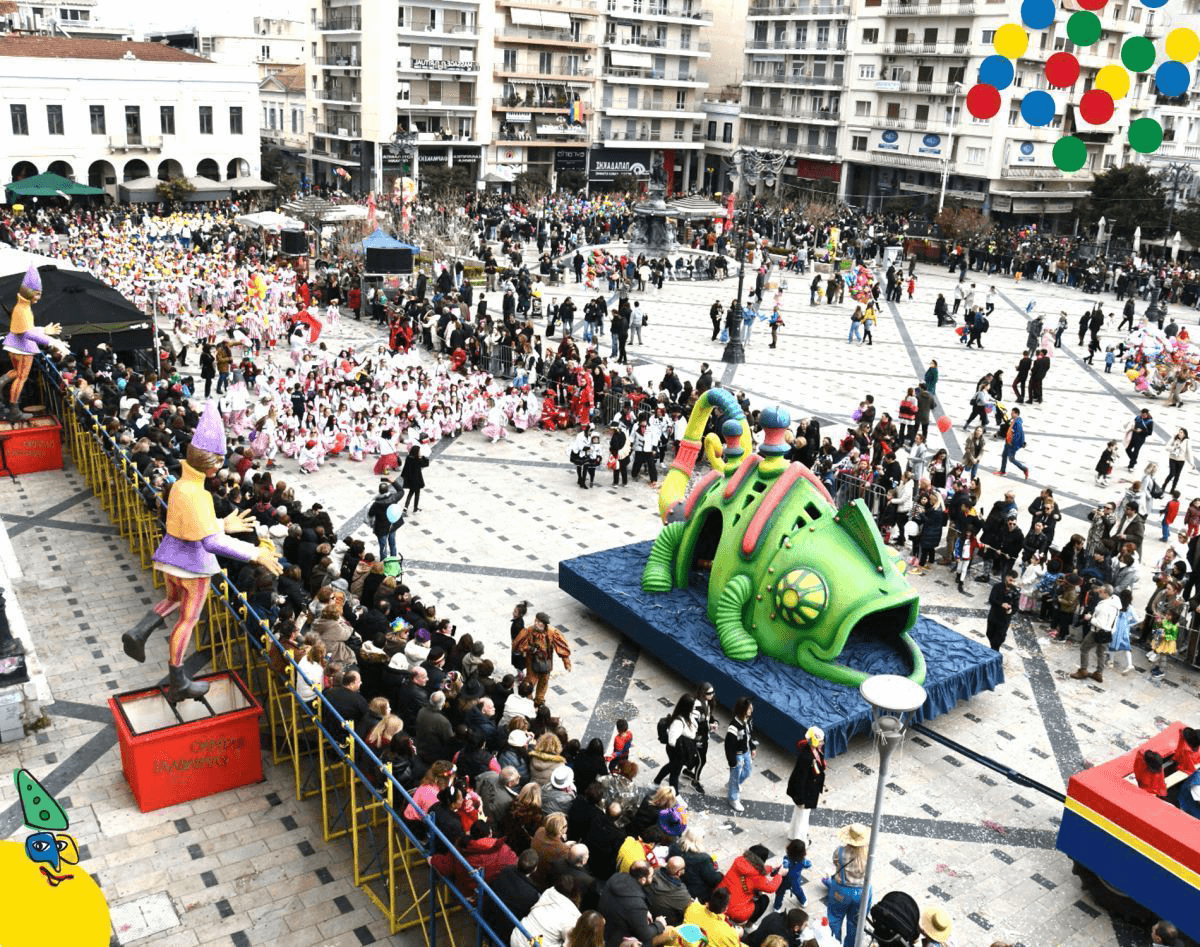
The Patras Carnival is one of the biggest festive events in Greece. With origins dating back to the 1820s, the Patras Carnival draws inspiration from ancient Dionysian celebrations. The Grand Parade features giant floats decorated with humorous themes, such as caricatures of political figures or scenes drawn from pop culture. A popular activity is the treasure hunt, where groups roam the city in search of clues hidden in places like Georgiou Square or the Apollon Theatre. The event ends with the burning of the Carnival King on the waters of the Gulf of Patras, followed by fireworks.
Dates of the current edition
The 2025 Patras Carnival will run from Friday, January 17 to Monday, March 3, 2025. The night parade is scheduled for Saturday, March 1, followed by the grand parade on Sunday, March 2. Carnival concludes on Monday, March 3, Clean Monday, which marks the start of Orthodox Lent.
Where does the Patras Carnival take place?
The Patras Carnival brings the whole city to life, but certain spots are at the heart of the festivities. Georgiou Square, adorned with festive lights, hosts the opening ceremonies with concerts and pyrotechnic shows. During the parades, the floats travel along Korinthou and Maizonos avenues, transformed into colourful corridors where thousands of spectators cheer. It is at the Port of Patras that the Carnival King is burned during the closing ceremony, accompanied by fireworks lighting up the Gulf of Patras. Treasure hunt participants explore historic sites such as the Apollon Theatre, the Patras lighthouse, or Psilalonia hill, where clues are hidden. Bars and clubs around the marina and in the Ladadika district host costume parties. Even local markets, such as the one on Agiou Andreou avenue, are decked out in decorations.
History of the Patras Carnival
The Patras Carnival dates back to 1829, the year a masked ball was held at the home of Greek merchant Moréas, marking the beginning of a festive tradition in the city. At the time, Venetian influences were strong due to trade exchanges, which introduced elements such as masks and decorated floats. In 1870, the first official parade was organised, with horse-drawn floats decorated by hand. In the 1900s, satirical themes began to emerge, criticising politics. During troubled periods, such as the two world wars, carnival was temporarily suspended but resumed with even more enthusiasm.
The Patras Carnival in art and literature
Painter Spyros Vassiliou, in his painting The Festivities of Patras, portrays the joyful crowd with dancing scenes. In literature, Kostis Palamas, a poet born in Patras, evokes in his poem The Carnival the extravagant costumes and collective euphoria, while Stratis Tsirkas describes in his novel Drifting Cities a celebration where carnival traditions symbolise resistance to social constraints. More recently, the novel The Carnival King's Dream by Ioanna Karistiani draws directly on the ceremony of burning the Carnival King, which closes the festivities. In theatre, plays such as Masks and Revelations by Dimitris Psathas use carnival as a backdrop to explore the hidden identities of characters.