Mawlid
David Chelly, January 21, 2026
Mawlid, also called Eid Milad un-Nabi, is a commemoration of the birth of the Prophet Muhammad observed by many Muslims. The date varies depending on the branch and on the sighting of the lunar calendar. Sunnis generally place it on the 12th day of Rabi al-awwal, while many Shia Muslims celebrate it on the 17th day of that same month.
Date of Mawlid in 2026
In 2026, Mawlid falls around Wednesday, August 26, 2026. Depending on the country and the local confirmation of the start of the lunar month, the celebration may be observed the evening before or shifted by a day, which is why some communities mark it from Tuesday, August 25 through Wednesday, August 26, 2026, and others from Wednesday, August 26 through Thursday, August 27, 2026.
What is Mawlid?
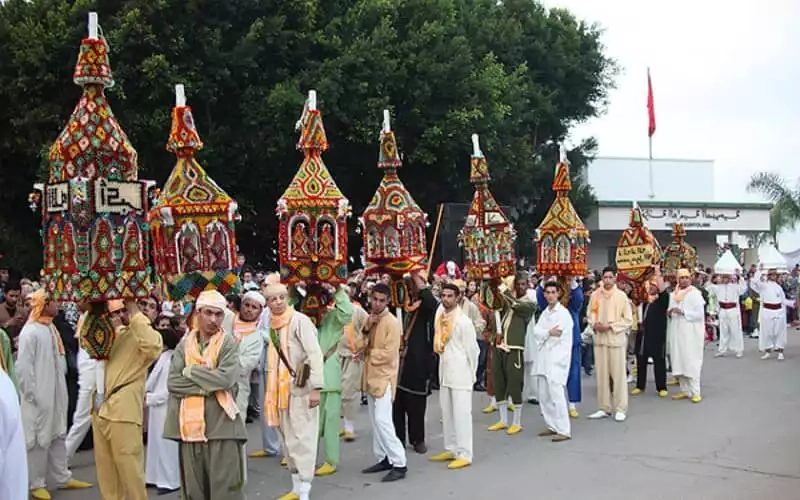
For those who observe it, Mawlid is a moment of spiritual remembrance and transmission centered on the life of the Prophet. Practices vary widely, but often include readings from the Quran, accounts of the sira, poems and songs of praise, sermons, shared meals, and acts of charity. In some cities, there are also decorations, illuminations, and public gatherings, with intensity that depends as much on cultural traditions as on local religious sensibilities.
What Mawlid Nabawi Charif means
Mawlid Nabawi Charif literally means the noble birth of the Prophet. The expression refers to the commemoration of that birth and, more broadly, to an evening or period devoted to recalling his example, his teaching, and his place in the faith.
Origins and historical development
The first institutionalized celebrations of Mawlid are often attributed to the Fatimids, a Shia dynasty that ruled between the 10th and 12th centuries. From the 12th century onward, the practice grew in popularity under other rulers and spread beyond Shia regions. It gradually became a tradition present in many countries, taking very different forms depending on the culture: North Africa, the Middle East, West Africa, or South Asia.
A debated topic within Islamic tradition
Mawlid is not celebrated by all Muslims and remains a subject of debate. Some scholars consider it a positive innovation when it serves to remember the Prophet, teach, and strengthen spiritual connection, provided the practice remains consistent with the principles of Islam and avoids excess. Others, particularly within stricter currents, oppose it, viewing it as unsupported by the practice of the earliest generations, and highlight the risk of excesses, whether superstitious or overly ostentatious.
How to wish someone a happy Mawlid
The most common phrases in Arabic are Mawlid Nabawi Mubarak, to wish someone a blessed Mawlid, and Kullu am wa antum bi-khayr, which expresses a wish of goodness for each year. In English, a Happy Mawlid or a Blessed Mawlid Celebration works well in most contexts. For a more personal message, a simple phrase centered on peace and blessings, for the person and their family, generally remains the most appropriate, taking into account each person's sensitivity toward this celebration.
How Mawlid is celebrated
Forms of celebration range from a quiet vigil to a more visible communal event. These may include readings, religious reminders, poetic recitations, communal meals, and distributions to those in need. In some regions, the cultural dimension is marked with processions, songs, and decorations, while other communities favor a more inward approach, centered on prayer, teaching, and charity.