The Fall of the Last Muslim Stronghold in Spain
Manuel Van den Broucke, sports, society and politics correspondent, January 2, 2026
The War of Granada and its stages
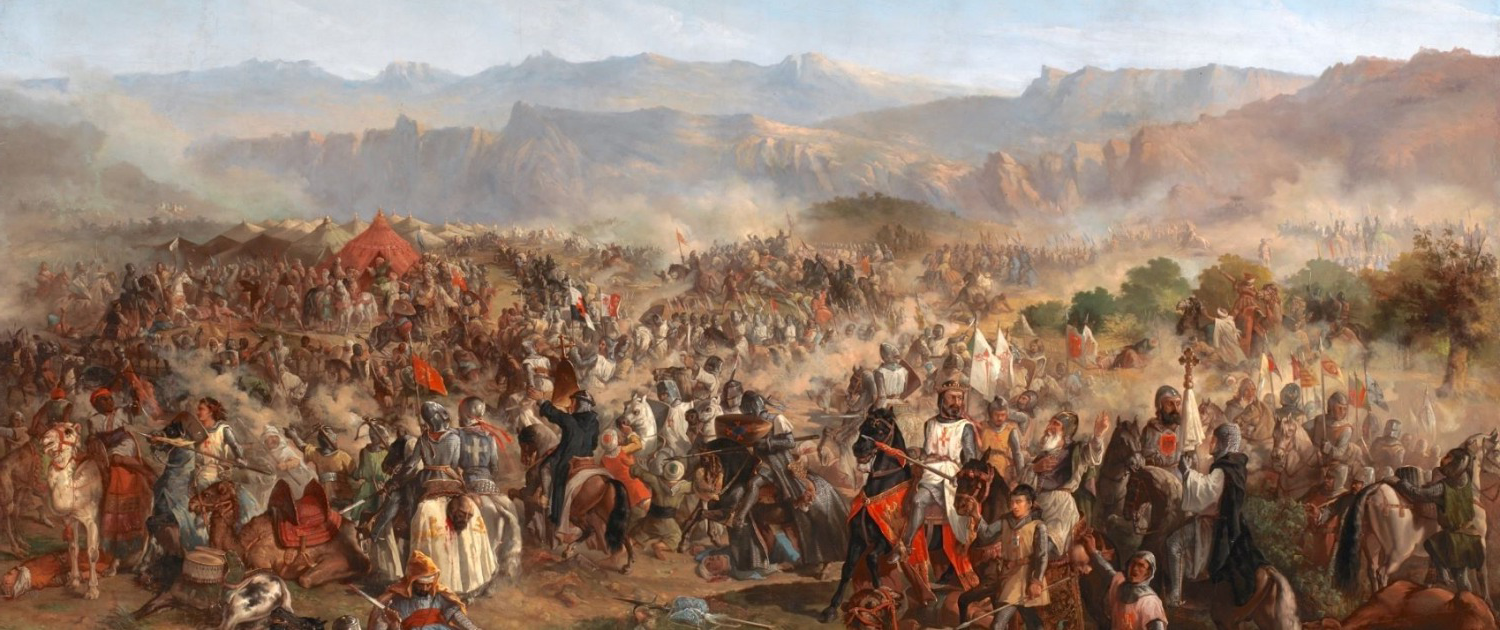
The War of Granada (1482-1492) marks the final conflict of the Reconquista, pitting the Catholic Monarchs, Isabella of Castile and Ferdinand of Aragon, against the Muslim kingdom of Granada, the last Islamic stronghold in Spain. This conflict was triggered by diplomatic tensions heightened by the Christian monarchs' ambition to unify the peninsula under a Catholic banner. Among the key stages were the capture of Alhama in 1482, which weakened the sultanate's positions, and the campaigns of 1487 to 1489, which saw the fall of cities such as Málaga, Baza and Almería. Finally, on January 2, 1492, Boabdil, the last emir of Granada, capitulated, handing over the keys of the city to Ferdinand and Isabella.
The decisions of the Catholic Monarchs
From the very start of the reign of Isabella of Castile and Ferdinand, they adopted a policy of religious unification aimed at strengthening Catholic influence in Spain. They established a strategy of gradual conquest, aiming to isolate cities and destroy the alliances of the Muslim kingdom. Moreover, their decision to promote the crusade against Granada as a holy war allowed them to secure financial support from the Church and other European Christian powers.
They also encouraged a policy of colonizing the conquered territories, redistributing land to nobles and Christian soldiers. After the final victory, Isabella and Ferdinand decided to impose Catholicism by enacting measures such as the expulsion of the Jews and the forced conversion of the Muslims remaining in Spain.
Boabdil's surrender
The surrender of Boabdil, the last emir of Granada, symbolizes the end of Muslim rule in Spain after eight centuries of presence. Cornered by the military advances of the Catholic Monarchs, Boabdil agreed to negotiate his capitulation in November 1491. The surrender agreement, known as the "Capitulations of Granada," initially guaranteed lenient conditions for Muslims: freedom of worship, preservation of property and respect for traditions. However, these promises were quickly called into question in the years that followed. The official surrender took place on January 2, 1492, marked by the handing over of the city's keys to the Catholic sovereigns.
According to legend, Boabdil, leaving Granada for exile, stopped on a nearby hill where, taking one last look at the city, he wept bitterly. His mother is said to have then spoken the famous words: "Weep like a woman for a kingdom you did not defend like a man." This moment, known as "The Moor's Last Sigh," embodies the melancholy of the end of a golden age for Andalusian civilization. Boabdil then lived in exile in the Maghreb, while Granada entered a new era under Christian rule.
The consequences of the fall of Granada
The fall of Granada in 1492 marked the completion of the Reconquista, unifying the Iberian Peninsula under the rule of the Catholic Monarchs. Religious unification became a priority, leading to the imposition of Catholicism through radical measures such as the expulsion of the Jews in 1492 and the forced conversion of Muslims.
On the international stage, the victory at Granada strengthened the image of the Catholic Monarchs as defenders of Christianity and fostered Spain's rise as a world power. Shortly after, in 1492, Christopher Columbus was funded by Isabella for his voyage to the New World, marking the beginning of Spanish colonial expansion.
The legacy of Al-Andalus after 1492
Despite the end of Muslim rule, Andalusian influences continued to shape the Iberian landscape, notably through masterpieces such as the Alhambra of Granada, the Great Mosque of Córdoba and the Alcázar of Seville.
The Treaty of 1491 and its terms
The Treaty of 1491, also known as the "Capitulations of Granada," was an agreement signed between the Catholic Monarchs and Boabdil, the last emir of Granada, to organize the peaceful surrender of the city. The terms of this treaty aimed to guarantee a bloodless transition while offering guarantees to the Muslim inhabitants. It notably stipulated the preservation of their property, the maintenance of their religious institutions, freedom of worship and protection against persecution. The rights of Muslims to practice their faith, retain their customs and administer their community affairs were officially recognized.
However, these promises were quickly called into question. Under pressure from the Inquisition and as part of the Catholic Monarchs' policy of religious unification, these rights were progressively violated. Within a few years, Muslims were forced into conversion or exile, while their property and religious institutions were confiscated. The Treaty of 1491 thus became the starting point for a series of repressive measures that sealed the end of the Muslim presence on the Iberian Peninsula.