January 31: National Day of the Republic of Nauru
Céline Arétin, head of cultural, women's and environmental topics, January 31, 2025
Origin of Nauru's National Day
The National Day of the Republic of Nauru, celebrated every January 31, marks the country's independence achieved in 1968. Before that, Nauru was successively under the control of Germany (1888-1914), Australia under a League of Nations mandate (1919-1942), then occupied by Japan during the Second World War (1942-1945), before being placed under the joint trusteeship of Australia, the United Kingdom, and New Zealand under the auspices of the UN. The independence process officially began in 1966 with a referendum, in which Nauruans voted for their sovereignty. The country's first president, Hammer DeRoburt, then negotiated the transition with Australia, which finally agreed to full independence in 1968.
The historical context of Nauru's independence
Before the arrival of the colonial powers, Nauru was inhabited by Polynesian and Micronesian clans who lived mainly from fishing and agriculture. In 1888, the island was annexed by the German Empire and incorporated into German New Guinea. In 1900, geologists discovered significant phosphate reserves, a mineral resource essential for agriculture. Phosphate mining began in 1906 under the control of the Pacific Phosphate Company, a British and Australian firm.
After Germany's defeat in 1914, Australia took control of the island, which was then placed under a League of Nations mandate in 1919, jointly administered by Australia, New Zealand, and the United Kingdom. During the Second World War, Nauru was invaded by Japanese forces in 1942. More than 1,200 Nauruans were deported to the Truk Islands (present-day Chuuk, in Micronesia), where many died of malnutrition and disease. In 1945, the island was liberated by Allied forces and returned to Australian administration, then came under UN trusteeship in 1947. Nauru officially became an independent state on January 31, 1968, with Hammer DeRoburt as its first president. Shortly afterward, the government bought back the Nauru Phosphate Corporation in 1970.
Traditions and official celebrations
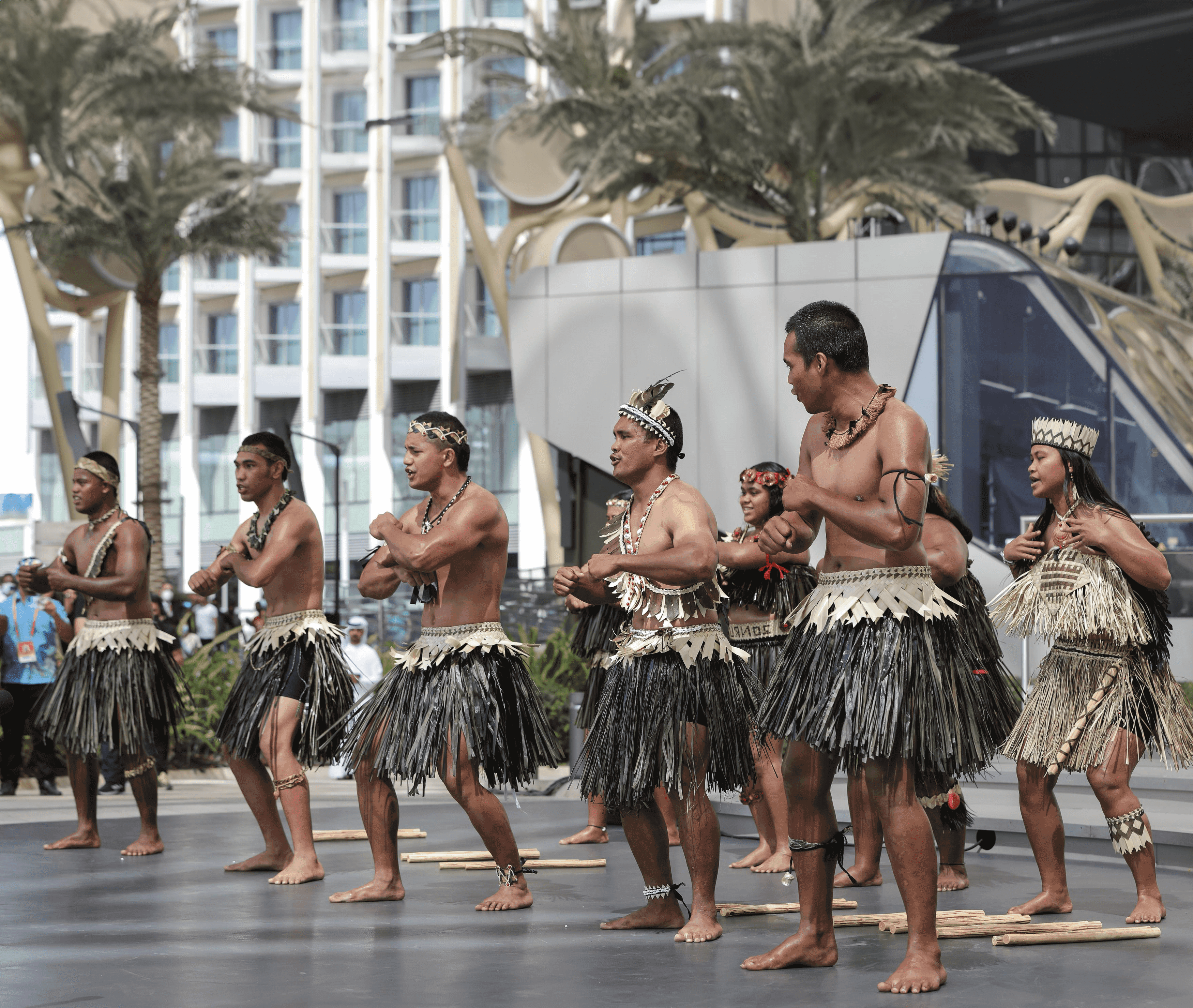
Celebrations for Nauru's National Day, on January 31, begin at dawn with a flag-raising ceremony at Government House in Yaren. Schools hold ceremonies where children sing the national anthem, Nauru Bwiema. In the villages, dance competitions such as the Eamwididi take place. Families prepare traditional dishes such as coconut fish (fish marinated in coconut milk and cooked on hot stones), grilled taro, and fresh seafood.